A well-run ELISA assay depends on more than a good kit and careful pipetting. It also depends on whether your samples behave the way they should across dilution points. That is why dilution linearity is such an important concept in method development, troubleshooting, and ELISA validation. When the sample response remains proportional across a planned dilution series, researchers gain greater confidence that the assay is measuring true analyte behavior rather than matrix-related interference or inconsistent sample performance.
Introduction to ELISA and why linearity matters
Any useful Introduction to ELISA should go beyond the basic idea of antibody-based detection and explain why assay quality depends on sample behavior as much as reagent performance. ELISA is widely used because it provides sensitive, scalable analyte detection across research, quality control, and bioprocess workflows. But the signal alone is not enough. Researchers also need to know whether the signal changes predictably.
That is where dilution linearity becomes valuable. If a sample is diluted stepwise and the measured concentration adjusts proportionally after correction for the dilution factor, that supports confidence in the assay response. When the response does not track as expected, it may indicate matrix effects, interference, poor recovery, or other assay limitations that warrant attention.
What dilution linearity means in an ELISA assay
In a typical ELISA assay, dilution linearity refers to how consistently a sample behaves when measured at multiple dilutions. If the assay performs well for that sample type, the back-calculated results across different dilutions should fall within an acceptable range.
This matters because many biological and process-related samples are not simple. Proteins, buffers, serum components, cell culture media, host-cell-derived background material, and other matrix factors can influence signal behavior. Without checking dilution linearity, a strong-looking result at one dilution may still be misleading.
A good linearity check can help researchers:
- Confirm that the sample is behaving predictably
- Reduce uncertainty caused by matrix interference
- Support stronger ELISA validation decisions
- Identify more appropriate working dilution ranges
- Improve confidence in reported concentrations
For many teams, this makes dilution linearity one of the most practical tools for improving assay trustworthiness.
Why is dilution linearity important during ELISA validation
ELISA validation is about showing that an assay performs well for its intended purpose. Depending on the application, this may include evaluating accuracy, precision, specificity, range, robustness, and sample behavior. Dilution linearity naturally belongs in that conversation because it helps show whether the assay response remains consistent when real samples are diluted.
This is especially useful during early method setup, sample qualification, and troubleshooting. A sample that looks acceptable at one dilution may reveal performance differences once a dilution series is tested. In that way, dilution linearity supports better decision-making before the assay is used routinely.
For example, teams may use dilution linearity to:
- Compare candidate sample dilution ranges
- Assess performance in challenging matrices
- Support fit-for-purpose ELISA validation
- Refine the sample preparation strategy
- Strengthen routine reporting confidence
A thoughtful validation workflow does not just confirm that the assay can detect an analyte. It also confirms that real samples behave in a reliable and interpretable way.
Common reasons dilution linearity may fail
When the dilution response is inconsistent, the issue may not always come from a single obvious mistake. In many cases, nonlinearity reflects interactions between the assay chemistry and the sample matrix.
Some common causes include:
- Matrix interference from sample components
- Signal suppression or enhancement at lower dilutions
- Inappropriate sample dilution range
- Pipetting inconsistency across dilution steps
- Edge effects or plate handling variation
- Analyte instability during preparation
These are some of the most common ELISA Problems teams encounter when they begin evaluating sample performance more closely. The upside is that dilution linearity testing often makes these issues easier to detect early, allowing them to be addressed before they affect larger studies or release decisions.
A practical approach to establishing dilution linearity
Establishing dilution linearity need not feel overly complex. What matters most is building a clear and repeatable process.
A practical approach often includes the following steps:
1. Start with a well-characterized sample
Choose a representative sample with a measurable analyte signal and enough volume to support repeated testing.
2. Define a reasonable dilution series
Select a range that reflects likely routine use in your ELISA assay. The goal is to test whether results remain consistent across relevant working dilutions.
3. Run the dilutions carefully
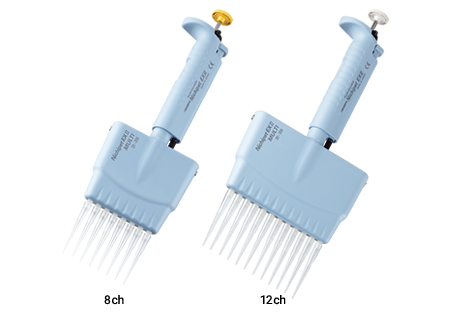
Use accurate liquid handling and consistent mixing. This is where good pipettes, appropriate tubes, and an organized bench setup make a real difference.
4. Back-calculate corrected concentrations
Compare the dilution-corrected values across the tested series and assess how closely they align.
5. Interpret the trend, not just one point
A single acceptable dilution does not prove linearity. The full dilution pattern is what helps reveal whether the sample behaves predictably.
6. Use findings to refine the method
If needed, adjust sample preparation, working dilution range, or assay conditions to improve performance.
This kind of structured review supports stronger routine use and helps make assay interpretation more defensible.
Host Cell Protein immunoassay and matrix complexity
The value of dilution linearity becomes even more apparent in more complex immunoassay settings, including a Host Cell Protein immunoassay. In these workflows, samples may contain a challenging mixture of background components from bioprocess streams, purification steps, or formulation environments. That complexity can make matrix effects more noticeable and can influence how well dilution-corrected results agree.
For this reason, teams using a Host Cell Protein immunoassay often benefit from a careful dilution strategy and thoughtful sample evaluation. A strong dilution linearity profile can add confidence that the signal reflects the intended analyte relationship rather than interference from the surrounding matrix. This does not only matter in specialized bioprocess contexts. It also reinforces a broader principle: the more complex the sample, the more valuable a good dilution linearity check becomes.
ELISA solutions for improving linearity performance
When researchers identify nonlinearity, the next step is not frustration. It is optimization. Many effective ELISA Solutions come from improving small parts of the workflow rather than changing everything at once.
Helpful strategies may include:
- Adjusting the starting dilution
- Narrowing the working dilution window
- Improving sample mixing consistency
- Reviewing plate handling technique
- Reducing time delays during preparation
- Reassessing buffer compatibility with the sample matrix
These kinds of improvements often resolve recurring ELISA Problems more efficiently than broad trial-and-error changes. A systematic approach usually produces faster progress and clearer conclusions.
Why workflow tools matter in ELISA validation
Even when the assay chemistry is strong, workflow execution still matters. In real laboratories, reproducibility depends on dependable tools and practical organization. Pipetting accuracy, tube choice, plate handling, timing consistency, and clean preparation areas all contribute to better dilution studies.
This is where Astor Scientific fits especially well. Its broader catalog can support ELISA-centered workflows with ELISA Kits, liquid-handling tools, plasticware, centrifuges, and related lab supplies that help teams work more consistently. For startups and growing labs, this kind of connected sourcing is useful because immunoassay performance often improves when the surrounding workflow becomes more controlled.
How dilution linearity supports stronger assay confidence
At a practical level, dilution linearity helps determine whether a result can be trusted across a realistic sample range. That makes it valuable not only for validation but also for ongoing assay use. If teams understand which sample dilutions perform best and which matrices need closer attention, the assay becomes easier to use with confidence.
This contributes to better routine outcomes in several ways:
- Clearer sample interpretation
- Better-defined working dilution windows
- Greater confidence in reported results
- Earlier detection of matrix-related performance issues
- More robust overall ELISA validation
These advantages are especially meaningful in labs that need scalable, repeatable workflows rather than one-off experimental success.
Conclusion
Establishing dilution linearity is one of the most practical ways to improve the reliability of an ELISA assay. It helps researchers see whether real samples behave predictably across dilution points, supports stronger ELISA validation, and makes it easier to identify meaningful ELISA Problems before they become larger workflow issues. Whether you are working on a general research assay, refining method performance, or evaluating a more complex Host Cell Protein immunoassay, dilution linearity adds an important layer of confidence. It turns a simple signal into a more trustworthy result.