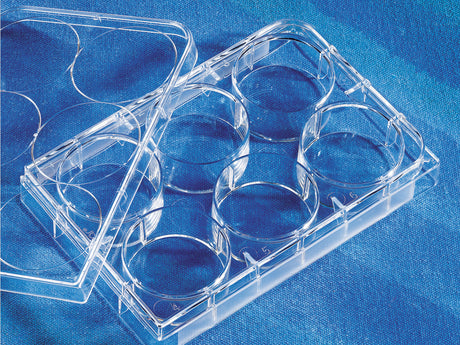
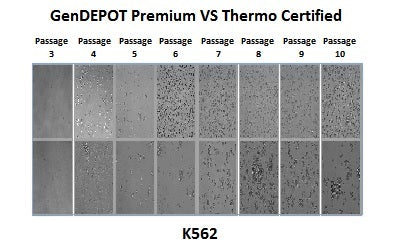
Buy TC-treated cell culture plates when your cells need to attach and spread on the well surface. Buy non-treated cell culture plates when your cells grow in suspension and your method specifies standard untreated plastic. If your assay requires spheroids, minimal attachment, or a specific extracellular matrix, check for the designated low-attachment surface or coating before ordering. Choose the surface first, then the well counts. 6-well plates give you more growth area per condition, 24-well plates balance sample recovery with the number of conditions, and 96-well plates suit experiments with more replicates or plate-reader measurements.
Which Cell Culture Plate Should You Buy?
|
If your workflow needs… |
AstorScientific product |
Format and packaging |
What to check before ordering |
|
Routine adherent culture with one sterile plate opened at a time |
Individually wrapped. 6- and 24-well options list 50 plates per case. The 96-well option lists 100 per case. |
Select the well count and confirm the catalog number on the quote. AstorScientific |
|
|
Routine adherent culture with several plates used per session |
Listed as 10 per pack. Catalog numbers NT703002 for 6 wells, NT702002 for 24 wells, and NT701002 for 96 wells. |
Confirm how plates are wrapped. The listing describes both bulk packaging and individual wrapping. AstorScientific |
|
|
Suspension culture in a standard flat-bottom plate |
Individually packaged product family covering 6 through 384 wells. |
Confirm the selected variant and case quantity. AstorScientific |
|
|
A low-evaporation design in 6 or 96 wells |
One per pack, 50 per case. TC-treated and non-treated variants are listed for both well counts. |
Select the surface explicitly. The same listing contains all four variants. AstorScientific |
|
|
A 96-well workflow that specifies a rounded bottom |
One per pack, 100 per case. TC-treated and non-treated options are listed. |
Confirm both the surface and the U-bottom geometry in your assay method. AstorScientific |
For a purchase quote, include the well count, surface treatment, bottom shape, and number of plates you need. Several listings contain multiple variants, so confirm pricing and availability for the exact configuration. Request a quote from AstorScientific.
What Is the Difference Between TC-Treated and Non-Treated Plates?
|
Buying criterion |
TC-treated cell culture plates |
Non-treated cell culture plates |
|
Surface |
Modified to make the surface more wettable and support attachment in many adherent cell workflows |
Standard untreated surface, which is generally more hydrophobic |
|
Typical use |
Cells that need to attach and spread |
Suspension cells or methods that specify untreated plastic |
|
What to verify |
Whether the cells also require a coating, such as collagen, laminin, or fibronectin |
Whether the method accepts standard untreated plastic or requires a dedicated low-attachment surface |
|
Sterility |
Available in sterile formats |
Also available in sterile formats |
|
Bottom shape |
Select separately from surface treatment |
Select separately from surface treatment |
AstorScientific’s NEST listings describe vacuum plasma treatment for its TC-treated plates and offer sterile untreated formats as well. In a product title, sterile describes the supplied condition, while TC-treated describes the growth surface. Look for both when your workflow requires both. AstorScientific
When Should You Buy TC-Treated Cell Culture Plates?
Choose tissue culture-treated plates when an attached cell layer is part of the workflow. Common examples include monitoring cell morphology, comparing the response to treatments in an adherent culture, and collecting cells or lysate from a defined growth area.

Routine culture of adherent cells
A sterile, flat-bottom TC-treated plate is a practical starting point when your cell supplier or lab method specifies standard tissue culture plastic. The flat base also gives you a consistent plane for observing cell attachment and coverage across the well. Match the well count to the area you need per sample and how many conditions you want to compare.
Assays with washing or medium changes
If your workflow depends on an attached cell layer staying in place through liquid changes, retain the surface specified in the method. When evaluating a replacement plate, compare initial attachment, cell distribution, and retention after routine handling. Those observations tell you more about whether the plate fits your workflow than the label alone.
Adherent cells that require a coating
Some cell types require a specific matrix even on tissue culture plastic. If the method specifies a coating, check the matrix, the required base surface, and whether the plate should arrive pre-coated. TC treatment and matrix coating are separate specifications. Include both on the purchase request when both are required.
When Should You Buy Non-Treated Cell Culture Plates?
Choose non-treated cell culture plates when your cells are maintained in suspension and the method accepts standard untreated plastic. Then choose the bottom shape based on how you’ll observe, mix, or recover the sample.

Routine suspension cell culture
A sterile, flat-bottom untreated plate is a starting point when the workflow calls for standard suspension culture and you need to compare several conditions side by side. Use a 24-well format when you need more liquid or sample per condition. Choose a 96-well format when replicates, controls, or sample count take priority.
Suspension workflows that use U-bottom plates
A U-bottom well can help gather settled cells toward the center, which can be useful when the method calls for localized recovery or observation. AstorScientific lists both TC and Non-Treated variants on its NEST 96-well U-bottom page. Select the surface as well as the geometry. View NEST 96-well U-bottom plates. AstorScientific
Spheroids and other low-attachment workflows
If your method requires cells to aggregate while minimizing attachment to the well, follow its specification for an ultra-low-attachment surface, bottom shape, or both. Standard untreated plastic and dedicated low-attachment surfaces are separate product specifications. A rounded well can bring cells together, while the surface determines how readily they interact with the plastic.
Should You Buy 6-, 24-, or 96-Well Cell Culture Plates?
The table uses the growth areas and recommended medium volumes for the listed NEST flat-bottom TC-treated formats. Use the exact product specification when ordering a different plate design. AstorScientific
|
Format |
Growth area per well |
Recommended medium per well |
Choose it when… |
|
6-well cell culture plates |
9.5 cm² |
1.9–2.9 mL |
You need more growth area, more samples per condition, or space to handle each well individually. |
|
24-well cell culture plates |
1.9 cm² |
0.38–0.57 mL |
You want to compare multiple conditions while keeping enough material per well for observation or recovery. |
|
96-well cell culture plates |
0.32 cm² |
0.10–0.20 mL |
You need more replicates, more conditions, or a format that fits a compatible plate reader. |
Choose 6-well plates when sample yield matters
A 6-well cell culture plate gives you the most growth area per well of the three formats. It suits experiments with relatively few conditions where you need more cells or material from each condition. If the cells grow in suspension, base the format choice on the required liquid volume and sample recovery. Growth area matters most when the cells attach to the well.
Choose 24-well plates for a balance of conditions and recovery
A 24-well cell culture plate is useful when six wells are too few and a 96-well format gives you too little sample per condition. It lets you compare treatments and replicates on the same plate while keeping wells accessible for observation and handling. If you use inserts or imaging hardware, verify compatibility with the selected plate.
Choose 96-well plates for replicates and optical readouts
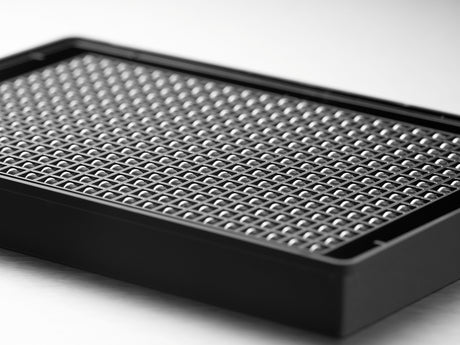
A 96-well cell culture plate gives you room for controls, replicates, and more conditions in one run. If you culture and measure in the same plate, specify both the growth surface and the optical configuration. For example, bottom-read fluorescence in adherent cells may require a TC-treated plate with black walls and a clear bottom. View black- and white-frame clear-bottom microplates.
Recheck the method when changing plate size
When moving an adherent culture from 6 to 24 or 96 wells, compare growth area per well before carrying over your seeding plan. For suspension culture, compare the working volume and the cell concentration your method specifies. The recommended medium volumes in the table apply to those listed plates. Confirm the total volume separately if detection reagent will be added to the same wells.
How to Compare Packaging and Cost Before Ordering
Individual wrap vs bulk pack
Individually wrapped tissue culture plates make sense when your lab opens one sterile plate at a time. Bulk packs are worth comparing when multiple plates are used together. Ask how each plate is sealed if the listing uses both descriptions. That detail matters when you plan to keep some plates from an opened pack for later use. AstorScientific
Standard plate vs low-evaporation design
Consider a low-evaporation plate if your lab has observed differences between edge and center wells, particularly in longer runs or lower-volume formats. Compare performance under your actual conditions before changing a validated method. AstorScientific lists TC-treated and non-treated EDGE variants in 6- and 96-well formats, so you can keep your required surface while evaluating the design. AstorScientific
Price per plate vs price per usable well
Divide the quoted case price by the number of plates in that case. Then compare the cost per usable well based on your actual layout. If your method leaves perimeter wells unused or requires a separate detection plate, factor that into the comparison. A case price is easiest to compare once the surface, geometry, packaging, and usable well count match.
FAQs About TC-Treated and Non-Treated Cell Culture Plates
1. Which cell culture plates are best for adherent cells?
Start with a sterile, flat-bottom TC-treated plate if your cell supplier specifies standard tissue culture plastic. For cells that require a matrix coating, match the coating and base surface to the cell supplier’s instructions. If you’ll image the cells, also confirm the bottom material and thickness.
2. Which cell culture plates are best for suspension cells?
Choose a sterile non-treated plate when the method calls for standard untreated plastic. Use a flat bottom for a workflow that specifies it, or a U-bottom when the method calls for cells to collect toward the center. Select a dedicated low-attachment surface if the method specifies one.
3. Are non-treated cell culture plates sterile?
They can be. Surface treatment and sterility are separate specifications. AstorScientific lists sterile NEST non-treated plates, including flat-bottom options and a non-treated variant in the 96-well U-bottom family. Check the product variant and packaging before ordering. AstorScientific
4. Can I use TC-treated plates for suspension cells?
Some established suspension workflows use TC-treated plates successfully. If your current method specifies non-treated plastic, evaluate any substitution before routine use. Compare cell recovery, viability, and any unwanted attachment under the same conditions. For a validated assay, keep the approved plate specification on the purchase order.
5. Can I switch between TC-treated plate brands with the same well count?
Compare growth area, surface treatment, bottom geometry, and working volume before switching. For an established assay, qualify the replacement against your current plate using the same acceptance criteria. Once approved, record the exact catalog number so procurement can reorder the tested configuration.
Buy the Right Tissue Culture Plates for Your Workflow
Choose TC-treated plates for routine adherent culture and non-treated plates for suspension methods that specify untreated plastic. Use 6 wells when you need more samples per condition, 24 wells when you need a balance of capacity and conditions, and 96 wells when throughput or plate-reader compatibility drives the choice. Browse AstorScientific cell culture plates and flasks, or share your required surface, well count, bottom shape, and quantity with sales to confirm the exact variant, current pricing, and availability.