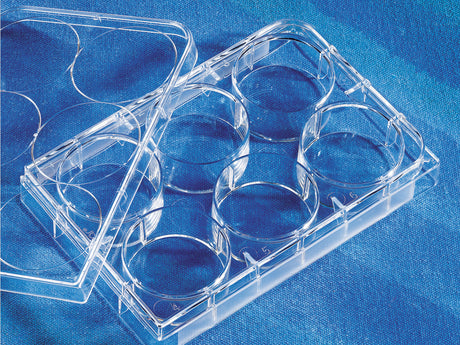
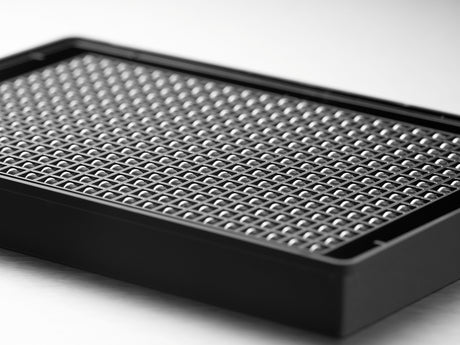
Choose clear 96-well plates for absorbance and colorimetric ELISA, black 96-well plates for most fluorescence assays, and white 96-well plates for most luminescence assays. For bottom-read fluorescence or luminescence, choose the appropriate wall color with a clear bottom. Then match the surface to the sample. High-binding plates support passive protein coating, while tissue culture-treated plates support adherent cell workflows.
Which 96-Well Plate Should You Buy?
|
Assay or workflow |
AstorScientific product |
Catalog number and packaging |
What to confirm before ordering |
|
Colorimetric ELISA with partial batches |
NT504201. Twelve strips of eight wells per plate, 50 plates per case. |
Select Clear – detachable. The frame is white and the wells are clear. |
|
|
Colorimetric ELISA with a fixed layout |
NT514201. 50 plates per case. |
Select Clear – undetachable. Check fit with your plate washer or automated handler. |
|
|
Adherent-cell fluorescence or bottom-read fluorescence |
Select Black. Sterile, TC-treated, one plate per pack and 30 per case. |
Confirm the black variant SKU and bottom specifications for your reader or microscope. |
|
|
Cell-based luminescence with bottom detection or imaging |
Select White. Sterile, TC-treated, one plate per pack and 30 per case. |
Confirm that the assay accepts a clear bottom and that your instrument supports the intended read direction. |
|
|
Top-read luminescence in an adherent-cell workflow |
AS-701301. Individually wrapped, 100 plates per case. |
Confirm bottom construction if your method specifies a solid-white plate. |
|
|
Chemiluminescent ELISA with passive protein coating |
NT504271. Twelve strips of eight wells per plate, 50 plates per case. |
Select White – detachable and check the optical requirements in your assay instructions. |
The ELISA variants share a product page. Use the manufacturer catalog number when requesting a quote. For the clear-bottom microplates, specify the frame color and confirm the variant SKU, selling unit, current pricing, and availability. Contact AstorScientific sales and support.
Clear vs Black vs White 96-Well Plates at a Glance
|
Plate construction |
Best starting point |
Why it fits |
What to check |
|
Clear wells and clear bottom |
Colorimetric ELISA, absorbance-based protein assays, colorimetric cell assays |
Light passes through the sample to the detector. |
Wavelength range, bottom shape, working volume, and surface treatment |
|
Black walls and opaque bottom |
Top-read fluorescence in solution |
Black material absorbs stray light and helps limit optical crosstalk between wells. |
Top-read compatibility and the surface required by the assay |
|
Black walls and clear bottom |
Bottom-read fluorescence, adherent-cell fluorescence, microscopy |
Black walls help control stray light while the clear base provides optical access. |
Bottom thickness, material, flatness, and objective clearance |
|
White walls and opaque bottom |
Top-read luminescence |
White surfaces reflect emitted light and can increase the signal the reader collects. |
Bottom construction and crosstalk between bright and dim wells |
|
White walls and clear bottom |
Bottom-read luminescence or a workflow that also needs imaging |
White walls reflect light while the base provides optical access from below. |
Signal and crosstalk with your reader, assay, and working volume |
Wall color affects how light interacts with each well. Bottom construction determines whether the instrument can read through the base. Surface treatment affects how cells or proteins interact with the plate. Specify all three when comparing 96-well microplates.
When Should You Choose Clear 96-Well Plates?
Choose a clear, flat-bottom plate when the reader measures absorbance through the well. Common uses include colorimetric ELISA and visible-wavelength protein assays. For an ELISA that relies on passive capture-antibody or antigen coating, choose high-binding polystyrene and decide whether detachable strips or a fixed layout fit your workflow.

Colorimetric ELISA and protein assays
An HRP/TMB ELISA read at 450 nm is a typical use for clear wells. The clear detachable NEST plate has a white frame, so order by well color and catalog number. The fixed transparent version gives you a single 96-well unit for workflows that use the full plate.
For an absorbance-based protein assay performed in solution, follow the assay supplier’s plate specification. High binding helps when you want proteins to adsorb to the plate. In a solution-phase assay, that same property may be undesirable. For direct UV absorbance, check the plate’s transmission at the required wavelength. A plate that looks clear can still absorb strongly in the UV.
Detachable strips or a fixed plate?
Choose detachable strips when your lab runs small batches and wants to load wells in groups of eight. Check how unused strips should be stored and whether your washer supports the strip frame. Choose a fixed plate when your lab routinely uses the full layout or the handling equipment requires a one-piece plate.
Comparing absorbance across runs
The liquid height in each well affects the optical path length. Use the same working volume and plate format for standards and samples. If you transfer an established method to a different plate, compare the blank and standard curve under matched conditions before applying your existing acceptance criteria.
Which 96-Well Plates Are Best for Fluorescence Assays?
Black 96-well plates are the starting point for most fluorescence microplate assays. Black walls absorb stray excitation and emitted light, helping limit interference from bright neighboring wells. Choose an opaque black plate for a compatible top-read assay in solution. Choose black walls with a clear bottom when the optics sit below the plate.

Top-read fluorescence in solution
For a homogeneous assay with fluorescent signal distributed throughout the liquid, an opaque black plate can suit a top-read setup. Check the assay instructions and the reader’s supported plate geometry. If the sample or reagent is prone to nonspecific adsorption, include the method’s surface requirements in your purchase specification.
Bottom-read fluorescence in adherent cells
When the signal comes from cells attached to the well base, shortlist a black-frame, clear-bottom, TC-treated plate. The clear base gives the reader access to the cell layer, and the tissue culture treatment supports attachment. Verify the read direction in the instrument method before running the plate.
Fluorescence microscopy and high-content imaging
For imaging, check bottom material, thickness, and flatness against your instrument specifications. These details matter when you use an objective with a short working distance. A plate that works in a bottom-reading microplate reader may still fall outside your microscope’s focus range. Confirm the optical specifications before buying a case.
Weak signals and uneven fluorescence
Compare the blank, a low positive control, and wells next to a bright control. Keep reader settings consistent when comparing plates. Judge the result by how well the plate separates the low positive from the blank. If the background is high, check the plate material, medium, and reagents individually to identify the source.
Which 96-Well Plates Are Best for Luminescence Assays?
White 96-well plates are the usual starting point for luminescence because their walls reflect emitted light. For assays such as ATP-based viability or luciferase reporter measurements, use the reagent kit’s recommended bottom construction and surface treatment to narrow the choice.
Top-read ATP and luciferase assays
If your top-reading luminometer method specifies a solid-white plate, confirm that the selected SKU has an opaque white bottom. AstorScientific lists AS-701301 as a white, flat-bottom, TC-treated plate. Ask sales to verify bottom opacity if your method requires it. The TC-treated surface suits workflows where adherent cells grow directly in the assay plate.
Bottom-read luminescence or imaging in the same plate
Choose white walls with a clear bottom when the assay uses bottom detection or requires imaging through the plate before the luminescence read. Confirm that your kit supports this format. If you move an established method from solid white to white with a clear bottom, recheck the blank, low-signal response, and replicate agreement.
Chemiluminescent ELISA
Shortlist a white high-binding ELISA plate when your method uses passive protein coating and a chemiluminescent substrate. AstorScientific lists both white wells and clear wells with a white frame on the same product page. Specify NT504271 for the white detachable version and check its specifications against your ELISA kit instructions.
Bright and dim samples on one plate
Check for crosstalk if your assay spans a wide signal range. Compare a blank next to a bright well with a blank farther away. If the adjacent blank reads higher, evaluate the plate layout and your reader’s crosstalk controls. Record the qualified layout with the method so it can be reproduced in routine runs.
How to Compare 96-Well Assay Plate Types Before Ordering
|
Specification |
Match it to your workflow |
What to put on the purchase request |
|
Read mode and direction |
Identify absorbance, fluorescence, or luminescence. For fluorescence and luminescence, confirm top or bottom detection. |
Reader model, read mode, and read direction |
|
Well and bottom color |
Use clear wells for absorbance, black walls for most fluorescence, and white walls for most luminescence. |
Wall color and clear or opaque bottom |
|
Surface treatment |
Choose high binding for passive protein coating, TC treatment for adherent cells, or the surface specified for the solution assay. |
Required surface treatment and sterility |
|
Well shape and volume |
Flat bottoms suit many optical reads and imaging workflows. Match the volume to the assay and reader. |
Bottom shape and actual working volume |
|
Packaging and handling |
Individually wrapped plates suit workflows that open one sterile plate at a time. Detachable strips suit partial ELISA batches. |
Plates per pack and case, plus strip or fixed format |
|
Automation and imaging |
Check instrument settings, plate height, and optical bottom requirements. |
Washer, handler, or imaging system model, where applicable |
Match the working volume to the assay
Maximum well capacity is the physical limit. Working volume depends on the assay, the plate, and the reader. AstorScientific lists 0.1–0.2 mL as the recommended culture-medium volume for AS-701301. If you add detection reagent to the same wells, confirm that the combined volume fits the method and the reader’s optical setup.
Choose the surface for your sample
A TC-treated plate supports adherent cell culture. A high-binding plate helps immobilize proteins in assays that rely on passive coating. If your workflow calls for untreated or low-binding wells, specify that when ordering. Frame color alone gives you no information about surface treatment.
Keep assay plates and PCR plates on separate order lines
A 96-well assay microplate is designed for a different instrument workflow than a 96-well PCR plate. For PCR or qPCR, match the plate to the thermal cycler’s block, well profile, seal, and optical system. If your lab stocks both, order assay microplates and PCR plasticware separately.
Compare the price per usable well
Ask for the price and plate count for the selected selling unit. For partial ELISA batches, factor in how many wells you use per run and whether you can store unused strips under the method’s requirements. For sterile cell culture, compare individually wrapped and bulk packaging based on how many plates your lab opens at a time.
Qualify a new plate before buying in bulk
Compare the new plate with your current plate using a reagent blank, a negative control, a low positive, and a high positive. Keep the working volume, timing, and reader settings consistent. This makes it easier to see whether changing the plate affects the result.
Use your lab’s existing acceptance criteria. For absorbance, compare the standard curve and blank. For fluorescence, compare background and separation at the low end. For luminescence, compare the low positive and check whether bright wells influence adjacent blanks. For full-plate assays, distribute replicate controls between edge and center wells to identify position effects.
Record the approved catalog number, read direction, and instrument settings with the method. Procurement can use that record to reorder the same configuration, and the lab has a reference for evaluating substitutions when stock changes.
Five FAQs About 96-Well Plates
1. Which 96-well plate color is best for ELISA?
Choose clear high-binding wells for a typical colorimetric ELISA that uses passive coating. For chemiluminescent detection, check whether the method specifies white high-binding wells. Some detachable ELISA plates use a white frame around clear wells, so check the well color when ordering.
2. Can I use clear 96-well plates for fluorescence?
Some validated fluorescence assays use clear plates. Black walls are a better starting point when stray light, background, or signal from neighboring wells is a concern. If your reader collects fluorescence from below, choose a black plate with a compatible clear bottom.
3. Are white 96-well plates better for luminescence?
White walls generally increase the emitted light available to the detector. Choose a solid-white plate when your validated top-read method specifies one. If you need to image through the plate or collect signals from below, confirm that the method supports a white-walled, clear-bottom plate.
4. Can one plate handle absorbance, fluorescence, and luminescence?
Some multimode workflows can use a single clear-bottom plate. Check whether it meets the wavelength, background, sensitivity, surface, and read-direction requirements for each measurement. Qualify the plate with controls for each mode before standardizing it across all three.
5. Is a flat-bottom 96-well plate always clear?
Flat-bottom describes the shape of the well base. The base can be clear or opaque. Look for a clear bottom in the specification if your reader or microscope needs access from below. For a white flat-bottom plate, confirm whether the base is opaque white or transparent.
Order the 96-Well Plate That Fits Your Assay
For colorimetric ELISA, start with a clear high-binding plate and choose fixed wells or detachable strips based on batch size. For adherent-cell fluorescence, shortlist a black-frame, clear-bottom plate. For luminescence, start with white wells and choose the bottom construction based on detector position and imaging requirements.
Browse AstorScientific cell culture plates and flasks, or send your reader model, assay type, preferred plate format, and quantity to AstorScientific sales and support to confirm the variant, case quantity, current pricing, and availability.