Accurate liquid handling is one of the foundations of good laboratory work. Whether a team is preparing PCR reactions, setting up ELISA plates, handling viscous reagents, or transferring valuable samples, the pipetting technique directly affects consistency and confidence. That is why the reverse pipetting technique is so useful. It gives researchers a more controlled way to handle certain liquids and can improve reproducibility in situations where standard dispensing feels less reliable.
What is reverse pipetting?
If you are asking what reverse pipetting is, it helps to start with the basic idea. In reverse pipetting, the user aspirates more liquid than the target delivery volume. During dispensing, the set volume is delivered, leaving a small residual amount in the tip. That extra liquid is intentionally retained rather than forced out into the final sample.
This approach can be very helpful when working with liquids that do not dispense neatly under normal conditions. In practice, the reverse pipetting technique is often used to improve repeatability and reduce the effect of bubbles, clinging liquid, or inconsistent release. Researchers often appreciate it because it can make pipetting feel more controlled in real bench conditions rather than only in ideal textbook examples.
Reverse vs forward pipetting.
Understanding the differences between reverse and forward pipetting helps clarify when each method is useful. In forward pipetting, the user aspirates the exact target volume and then dispenses it fully. This is the standard method most researchers learn first, and it works well for many routine aqueous solutions.
By contrast, reverse pipetting includes a slightly larger aspiration step and leaves residual liquid behind in the tip after dispensing. That difference may seem small, but it can have a meaningful impact when the liquid is difficult to handle.
A practical comparison looks like this:
- Forward pipetting is often ideal for routine water-like liquids
- The reverse pipetting technique is often more helpful for viscous, foaming, or sensitive solutions
- Forward pipetting is common for general daily transfers
- Reverse pipetting can improve consistency when exact release is harder to achieve
Both methods are useful. The key is knowing when the sample type and workflow make one approach more suitable than the other.
When to use the reverse pipetting technique
The reverse pipetting technique is especially helpful when liquids behave in ways that make standard dispensing less predictable. Some samples cling to the inside of the tip. Others foam, form bubbles, or flow more slowly because of their physical properties.
Researchers often use reverse pipetting when working with:
- Viscous solutions
- Foaming liquids
- Protein-rich or detergent-containing samples
- Small-volume assay reagents
- Liquids that tend to leave residue inside Pipette Tips
In these situations, reverse pipetting can support cleaner transfers and more consistent delivered volume. That is why it is often recommended in assay setup workflows where small inaccuracies can affect downstream performance.
Why reverse pipetting helps with difficult liquids.
Some liquids do not behave like water. They may move slowly, cling to plastic surfaces, or produce bubbles during aspiration and dispensing. When that happens, standard forward pipetting may still work, but it can become more sensitive to differences in user handling.
This is where the reverse pipetting technique becomes valuable. Because the method leaves residual liquid in the tip, it helps ensure the intended delivery volume is released more consistently. That can improve repeatability in workflows where transfer precision matters. This is particularly useful in assay work, sample prep, and reagent handling, where even small volume differences can influence the outcome.
The role of the air displacement pipette
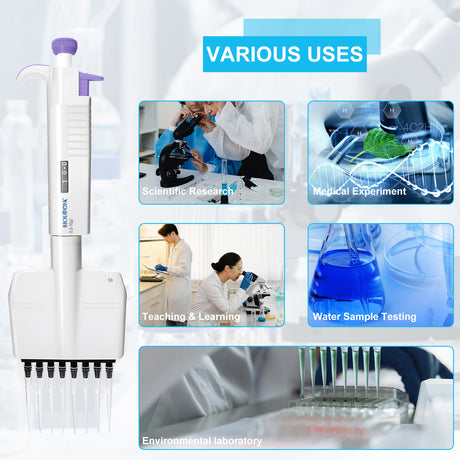
Most routine laboratory pipetting is done with an air displacement pipette, and understanding its behavior helps explain why reverse pipetting works so well in certain cases. In an air displacement system, a cushion of air sits between the piston and the liquid. That design is highly practical and widely used, but it also means liquid properties can influence how smoothly aspiration and dispensing occur.
With straightforward aqueous solutions, an air-displacement pipette performs very well under standard technique. But when the liquid becomes viscous, foamy, or surface-active, the transfer may benefit from a more controlled method. Reverse pipetting helps the user work with the system's physics rather than against it. That is why reverse pipetting is not just a trick. It is a useful method built around how the pipette and the liquid interact in real laboratory conditions.
Step-by-step guide to the reverse pipetting technique
One reason researchers like the reverse pipetting technique is that it is easy to learn once the basic idea is clear. A repeatable workflow helps make the method more intuitive.
A simple approach often looks like this:
1. Attach the correct tip
Choose clean, compatible Pipette Tips that fit securely and match the required volume range.
2. Press to the second stop before aspiration
Unlike forward pipetting, reverse pipetting begins with a deeper plunger press before the liquid is drawn up.
3. Aspirate the liquid smoothly
Release the plunger steadily so the tip aspirates both the target volume and the extra reserve volume.
4. Dispense to the first stop
Deliver the intended volume into the receiving vessel while leaving the remaining reserve liquid in the tip.
5. Discard the residual liquid with the tip
The extra amount is not added to the sample. It remains in the tip and is discarded.
With a little practice, this process becomes natural and can noticeably improve handling confidence for more challenging liquids.
Common mistakes to avoid
Like any technique, reverse pipetting works best when the basics are respected. A few small habits can quickly improve consistency.
Helpful reminders include:
- Use the correct volume range for the pipette
- Choose well-fitting Pipette Tips
- Aspirate and dispense smoothly rather than rushing
- Keep pipette angle and immersion depth consistent
- Avoid reusing tips when the workflow requires fresh ones
- Practice the sequence before using valuable samples
These habits support more reliable results and help users get the full benefit of the method.
Reverse pipetting and pipette performance.
Even the best technique works better when the instrument itself is performing well. Pipetting accuracy depends not only on user skill, but also on instrument condition. That is why Pipette Calibration and maintenance deserve regular attention. If a pipette is drifting out of specification, even strong technique may not fully protect assay quality. This is why many labs build routine checks around calibration, performance review, and preventive maintenance.
Important support areas include:
- Regular Pipette Calibration schedules
- Access to a dependable Pipette Calibration Service
- Timely pipette repair service when needed
- Proper storage and routine handling care
Together, these practices help ensure that both reverse and forward pipetting deliver the consistency researchers expect.
Why pipette tips matter more than many users expect
Researchers sometimes focus mainly on the pipette body, but Pipette Tips also influence transfer quality. Poor fit, inconsistent manufacturing, or tips that do not match the workflow can reduce confidence in aspiration and dispensing.
Good tips help support:
- Secure sealing on the pipette
- More dependable aspiration
- Better dispensing consistency
- Cleaner handling of sensitive reagents
- Greater confidence in repeat work
For labs aiming to improve liquid handling, tip quality is not a small detail. It is an important part of the full pipetting system.
How Astor Scientific supports better pipetting workflows
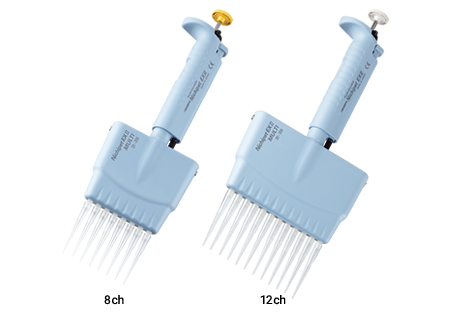
Astor Scientific is a natural fit for this topic because effective liquid handling depends on connected lab support. The brand offers Nichiryo pipettes and accessories, liquid-handling supplies, plasticware, and other research essentials that help labs build more reliable workflows. That matters for both new and growing laboratories. A strong pipetting routine requires the right instrument, compatible tips, an organized bench setup, and attention to maintenance. For teams that care about consistency, access to dependable equipment and support products makes executing everyday techniques easier. The discussion around Pipette Calibration Service, pipette repair service, and routine Pipette Calibration also aligns naturally with the Astor Scientific brand, as long-term pipetting quality depends on both product selection and ongoing instrument care.
Conclusion:
The reverse pipetting technique is one of the most useful skills researchers can add to their liquid handling toolkit. If you have ever wondered what reverse pipetting is, the answer is simple: it is a practical method that helps deliver more consistent results when liquids are difficult to handle with the standard technique. Understanding the differences between reverse and forward pipetting helps researchers choose the right approach for each workflow. Forward pipetting remains excellent for many routine transfers, while reverse pipetting can make a meaningful difference with viscous, foaming, or hard-to-dispense samples.
When paired with a dependable air-displacement pipette, quality Pipette Tips, and good instrument care through Pipette Calibration, Pipette Calibration Service, and pipette repair service, reverse pipetting becomes part of a stronger, more reliable laboratory workflow.