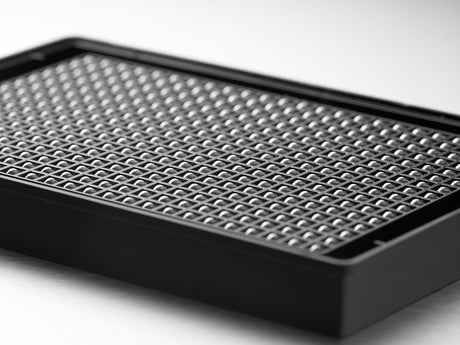
Choosing between high-binding vs medium-binding ELISA plates depends on the coating molecule, assay format, detection method, and required sensitivity. High-binding plates are commonly selected when reliable protein immobilization and sensitive detection are priorities. Medium-binding plates may be evaluated when a biomolecule already demonstrates effective passive adsorption under established coating conditions. Plate selection can influence coating efficiency, signal intensity, background control, well-to-well consistency, and overall assay performance. Laboratories should therefore compare the binding surface alongside plate color, well format, optical properties, and equipment compatibility.
Astor Scientific provides laboratory plasticware and ELISA workflow support for research, biotechnology, and diagnostic laboratories. Medium-binding plates are discussed in this guide as a technical comparison reference rather than an Astor Scientific purchasing option.
High-Binding vs Medium-Binding ELISA Plates: Quick Comparison
|
Selection factor |
High-binding ELISA plate |
Medium-binding ELISA plate |
|
Surface behavior |
Enhanced passive protein adsorption |
Moderate passive protein adsorption |
|
Common use |
Antibodies, antigens and purified proteins |
Biomolecules that already adsorb effectively |
|
Coating approach |
Supports efficient immobilization |
Suits established adsorption conditions |
|
Assay priority |
Sensitive and consistent protein detection |
Balanced adsorption for suitable biomolecules |
|
Protocol stage |
Useful during development and routine testing |
Useful when supported by established data |
|
Selection method |
Confirm through assay optimization |
Confirm through comparative testing |
For many protein-based ELISA workflows, a high-binding surface provides a practical starting point. The final choice should reflect the behavior of the actual antigen or antibody under the laboratory’s coating and detection conditions.
What Is an ELISA Plate?
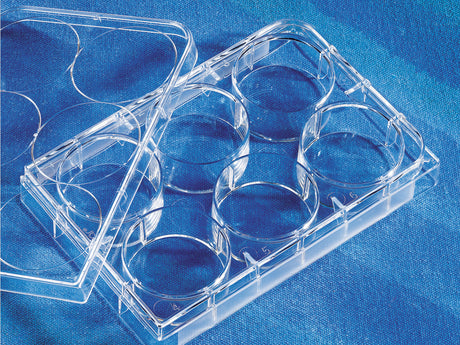
An ELISA plate is a multiwell microplate used to immobilize antibodies, antigens, or other biomolecules during an enzyme-linked immunosorbent assay. A standard 96-well plate allows samples, standards, blanks, and controls to be processed together. Most ELISA plates are manufactured from polystyrene because the material supports passive protein adsorption. During the coating stage, biomolecules attach to the plate through hydrophobic and other noncovalent interactions.
The strength and consistency of this adsorption can be influenced by:
- Protein structure
- Molecular size
- Hydrophobicity
- Protein concentration
- Coating-buffer composition
- Buffer pH
- Incubation time
- Incubation temperature
- Plate-surface treatment
An appropriate ELISA plate provides a consistent foundation for coating, blocking, washing, sample incubation, detection, and final signal measurement.

What Is a High-Binding ELISA Plate?
A high-binding ELISA plate has a treated polystyrene surface designed to support enhanced passive adsorption of proteins. These plates are commonly considered for antibodies, antigens, recombinant proteins, peptides, and other purified biomolecules.
High-binding plates are especially useful when:
- Reliable capture-antibody immobilization is important
- The coating molecule is available in a limited quantity
- Lower coating concentrations are being evaluated
- Sensitive analyte detection is required
- Researchers are developing a new ELISA
- Consistent adsorption across wells is a priority
- The assay uses purified proteins as standards or coating antigens
The enhanced surface provides assay developers with flexibility when testing multiple coating concentrations. This makes high-binding plates a strong starting option for many direct, indirect, and sandwich ELISA workflows.
What Is a Medium-Binding ELISA Plate?
A medium-binding ELISA plate generally uses an untreated or moderately adsorptive polystyrene surface. It provides moderate passive protein adsorption and may be evaluated for biomolecules that already demonstrate effective surface attachment under established coating conditions. The suitability of a medium-binding surface depends on the individual protein and assay protocol. Protein structure, hydrophobicity, concentration, coating buffer, blocking reagent, and incubation conditions can all influence surface adsorption.
A medium-binding plate may be evaluated when:
- The biomolecule adsorbs effectively to polystyrene
- The assay uses an established coating protocol
- The coating concentration has already been optimized
- Comparative testing produces a suitable signal-to-background ratio
- Existing validation data specifies a medium-binding surface
Medium-binding plates are included here to explain the available surface categories. Astor Scientific’s purchasing guidance should focus on the products and configurations confirmed through its current catalog or sales team.
Which ELISA Plate Surface Should You Choose?
The best surface is the one that provides reliable immobilization, a useful standard curve, consistent replicates, and clear separation between positive and blank wells.
Choose a High-Binding Plate When:
- You are developing a new protein-based ELISA
- Strong capture-antibody attachment is important
- Coating material is valuable
- Lower coating concentrations are being tested
- Sensitive detection is an assay priority
- Consistent protein adsorption is required
Evaluate a Medium-Binding Plate When:
- An established protocol specifies that surface
- The biomolecule already adsorbs effectively
- The coating concentration has been optimized
- Comparative data supports its performance
- Balanced adsorption matches the assay design
A side-by-side test can help confirm which surface is most suitable for the selected antigen, antibody, buffer, and detection system.
Match the Plate Surface to the ELISA Format
Different ELISA formats use the plate surface in different ways.
Sandwich ELISA
A sandwich ELISA begins with an immobilized capture antibody. High-binding plates are commonly evaluated because efficient capture-antibody attachment supports consistent analyte capture across the plate. Researchers comparing assay formats can also read Astor Scientific’s guide to sandwich and competitive ELISA.
Indirect ELISA
Indirect ELISA usually begins with antigen coating. The preferred surface depends on the antigen’s adsorption behavior and the required detection range. High-binding plates provide a practical starting point for many purified protein antigens.
Direct ELISA
Direct ELISA uses an immobilized antigen or antibody followed by a labeled detection reagent. Efficient surface binding helps establish a measurable and reproducible signal.
Competitive ELISA
Competitive ELISA designs vary according to the immobilized molecule and competition strategy. Plate coating density can influence the assay’s working range, making surface optimization valuable during development.
How Plate Color Affects Detection
Plate color should match the assay’s detection chemistry and plate-reader configuration.
|
Plate color |
Primary use |
|
Clear |
Colorimetric absorbance ELISA |
|
White |
Luminescence |
|
Black |
Fluorescence |
Clear Plates
Clear, flat-bottom plates are commonly used for traditional colorimetric ELISA. They allow absorbance to be measured through the bottom of each well and work with commonly used colorimetric substrates.
White Plates
White plates reflect light and are generally paired with luminescent detection. They can support assays in which signal reflection and light collection are important.
Black Plates
Black plates are commonly selected for fluorescence-based detection. Their optical design helps control light transmission between neighboring wells. Researchers should match the plate color to the detection reagent, reading direction, wavelength, and instrument specifications.

Detachable vs Fixed 96-Well Plates
The physical plate format affects sample capacity, workflow flexibility, and purchasing efficiency.
Detachable Strip Plates
A detachable plate contains individual well strips positioned inside a supporting frame. Laboratories can use the required number of strips for each assay run.
Detachable strips are useful for:
- Partial-plate assays
- Small sample batches
- Flexible daily testing
- Separate assay groups
- Efficient use of plates and assay reagents during partial runs
- Variable sample volumes across different projects
A laboratory processing 16 or 24 wells can prepare the required strips while preserving the remaining wells according to the manufacturer’s handling and storage instructions.
Fixed 96-Well Plates
A fixed plate keeps all 96 wells in one complete structure. This format is well suited to:
- Full-plate assays
- High-throughput sample processing
- Automated liquid handling
- Standardized plate washing
- Consistent plate-reader positioning
- Routine testing with predictable sample numbers
Detachable strips support flexible partial runs, while fixed plates support standardized full-plate processing.

Why Well Geometry Matters
Flat-bottom wells are commonly selected for ELISA because they provide a uniform coating surface and a consistent optical path. This geometry supports stable absorbance readings and works with many standard microplate readers.
Before selecting a plate, confirm:
- Well-bottom shape
- Recommended working volume
- Plate-reader compatibility
- Washing-system compatibility
- Multichannel pipette alignment
- Robotic handling compatibility
- Plate dimensions and footprint
These physical details help ensure that the selected plasticware fits smoothly into the laboratory’s existing workflow.
Why Plate Uniformity Matters
Well-to-well uniformity supports dependable standard curves and consistent comparisons between samples. This becomes especially important when an assay measures small differences in analyte concentration.
Useful quality considerations include:
- Consistent well dimensions
- Uniform surface treatment
- Stable plate geometry
- Reliable strip positioning
- Optical clarity
- Lot-to-lot consistency
- Compatibility with manual and automated equipment
Researchers should review manufacturer specifications and compare replicate performance during assay validation.
How to Compare ELISA Plate Surfaces
A focused side-by-side experiment can help determine which plate surface supports the desired assay performance.
Use the same:
- Coating molecule
- Coating concentrations
- Coating buffer
- Incubation time
- Blocking reagent
- Wash conditions
- Detection antibody
- Enzyme conjugate
- Substrate
- Plate-reader settings
Compare each plate using clearly defined performance criteria.
|
Evaluation point |
What to assess |
|
Signal intensity |
Strength of the measurable assay response |
|
Blank response |
Baseline signal from wells without analyte |
|
Signal-to-background ratio |
Separation between positive and blank wells |
|
Standard curve |
Quantitative range and curve shape |
|
Replicate CV |
Consistency between replicate wells |
|
Coating efficiency |
Effective use of the antigen or antibody |
|
Well uniformity |
Comparable performance across plate positions |
The selected plate should support the laboratory’s required sensitivity, precision, and operating range.

ELISA Plate Buying Checklist
Before requesting or purchasing an ELISA plate, confirm the following:
- High-binding or medium-binding surface
- Type of coating molecule
- Planned coating concentration
- Direct, indirect, sandwich, or competitive format
- Clear, white, or black plate
- Colorimetric, luminescent, or fluorescent detection
- Flat-bottom well geometry
- Detachable strips or fixed 96-well format
- Average number of samples per run
- Manual or automated plate washing
- Plate-reader compatibility
- Liquid-handling compatibility
- Required well uniformity
- Plate footprint
- Packaging quantity
- Routine assay frequency
This checklist helps laboratory and procurement teams compare plate options using practical assay requirements.
Selecting ELISA Plasticware with Astor Scientific
The right ELISA plate configuration helps laboratories match purchasing decisions to sample throughput, detection method, and routine assay volume. Detachable strips support efficient partial runs and variable sample numbers. Fixed 96-well plates support standardized full-plate processing, high-throughput testing, and automated workflows. Clear, white, and black formats serve different detection technologies.
Astor Scientific can help laboratories identify suitable plasticware according to:
- Required binding surface
- Detection chemistry
- Average sample throughput
- Plate-reader specifications
- Manual or automated handling
- Preferred well configuration
- Routine purchasing volume
Researchers can contact Astor Scientific with their required plate surface, color, format, and workflow details.
Find the Right ELISA Plate Configuration
Match the binding surface, plate color, well format, detection method, and sample throughput to your laboratory workflow.
Frequently Asked Questions
What is the difference between high-binding and medium-binding ELISA plates?
High-binding plates have a treated surface designed to enhance passive protein adsorption. Medium-binding plates provide moderate adsorption and may suit biomolecules that already attach effectively under established coating conditions.
Should I use a high-binding plate for sandwich ELISA?
A high-binding plate is a strong starting choice for sandwich ELISA because it supports reliable capture-antibody immobilization. Suitability can be confirmed by evaluating the standard curve, blank response, signal-to-background ratio, and replicate precision.
Which plate color is best for ELISA?
Clear plates are commonly used for colorimetric absorbance ELISA, white plates are generally used for luminescence, and black plates are used for fluorescence. The selected color should match the detection chemistry and plate reader.
Should I choose detachable strips or a fixed 96-well plate?
Detachable strips support partial runs, small sample batches, and flexible testing schedules. Fixed 96-well plates support full-plate processing, standardized handling, and automated workflows.
Does Astor Scientific offer medium-binding ELISA plates?
Astor Scientific’s online catalog and sales support focus on laboratory plasticware and ELISA workflow supplies. Medium-binding plates are discussed in this guide as a technical comparison reference. Laboratories can contact Astor Scientific to discuss their required binding surface, plate color, well format, and assay volume.
Conclusion
The choice between high-binding vs medium-binding ELISA plates should reflect the coating molecule and validated assay conditions. High-binding plates are commonly selected when efficient protein immobilization and sensitive detection are priorities. Medium-binding plates may be evaluated when a biomolecule already demonstrates effective passive adsorption under established conditions. Plate color, well geometry, detachable or fixed construction, sample throughput, and instrument compatibility should also guide the purchasing decision. A focused plate-comparison experiment can confirm which surface delivers the desired signal, standard-curve range, and replicate consistency. Astor Scientific supports laboratories in selecting plasticware and related supplies that align with their ELISA workflow requirements.