
If you’ve ever run an ELISA and felt like your results were “almost perfect” but not quite consistent—high background in a few wells, edge effects, or bigger-than-expected variability—your wash steps may be the fastest place to improve performance. In most labs, washing is the quiet hero of a clean assay. When washing is consistent, signals sharpen, background drops, and plate-to-plate repeatability improves.
This Introduction to ELISA plate washers explains what these instruments do, which features matter most, how to match a washer to your workflow, and a set of practical ELISA Tips & Tricks you can use immediately. Whether you’re running routine ELISA applications for biomarker work or scaling up screening assays on an ELISA plate, good wash technique makes your data easier to trust.
What does an ELISA plate washer do?
An ELISA plate washer automates the rinse-and-remove steps between incubation stages. Instead of washing by hand with a squeeze bottle or multichannel pipette, the washer delivers wash buffer into each well, mixes or soaks as configured, then aspirates the liquid out with controlled flow and timing.
That consistency matters because many ELISA problems are really wash problems in disguise. Residual unbound antibody or conjugate is one of the easiest things to clear with a solid wash routine, and doing so often gives you a noticeably cleaner background. Complete aspiration keeps wells crisp between steps and helps prevent carryover, especially in higher-sensitivity assays. Consistent technique is a big win here—standardized washing is one of the fastest ways to tighten well-to-well agreement. A washer helps you standardize the one step that most directly influences background and signal clarity.
Why washing quality has such a significant impact on ELISA performance
ELISA is a wonderfully straightforward binding assay. Each step builds specificity through binding and then removes everything that didn’t bind specifically. Washing is the “separation” part of that logic.
- When a wash step is well-controlled, you generally see:
- Lower background and cleaner negatives.
- Better separation between low and mid standards.
- Improved reproducibility between operators.
- More stable results across plates and days.
For many labs, a reliable washer is one of the most cost-effective upgrades because it improves quality without changing antibodies, standards, or detection chemistry.
ELISA plate basics: why the plate format matters
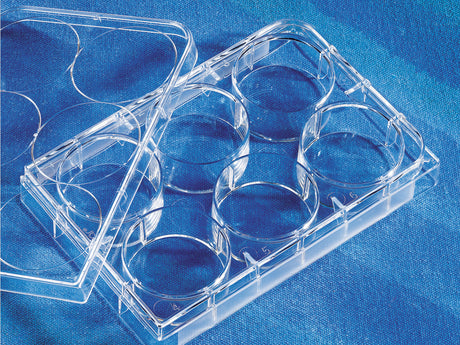
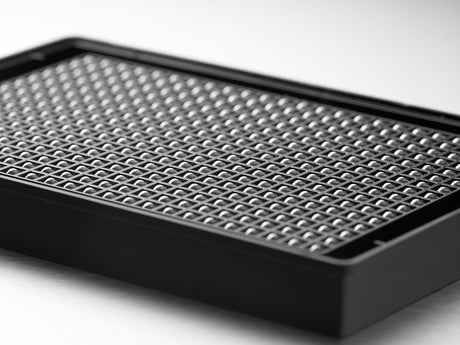
Before choosing equipment, it helps to revisit the basics of the ELISA plate. Most ELISAs are run on 96-well microplates designed for protein adsorption or pre-coated capture chemistry. A 96-well plate for ELISA is engineered to reduce variation and support consistent binding across wells. Plates can vary by surface chemistry (high-binding vs medium-binding), well shape (flat-bottom vs round-bottom), and treatment. These differences affect how reagents behave and can influence wash performance. When you change plate type, it’s smart to confirm the washer settings still produce clean aspiration and minimal residual volume.
Key features to look for in ELISA plate washers
Not all ELISA Plate Washers are identical. The best match depends on your throughput, assay complexity, and how much you want to optimize for ultra-clean background and day-to-day consistency.
1) Wash modes and programmable protocols
Look for flexible programming: number of wash cycles, dispense volume, aspiration speed, soak time, and optional shaking or mixing. This matters because some assays need short, frequent washes, while others benefit from a brief soak.
2) Aspiration and dispense control
Substantial control over aspiration height and speed helps prevent leftover droplets without scratching the plate.
For dispense, uniform delivery across wells reduces variability.
3) Manifold compatibility
A good washer supports common plate types and can handle flat-bottom plates reliably. Some systems offer interchangeable manifolds for strip-wells or different well geometries.
4) Residual volume and cross-contamination prevention
Low residual volume is essential for reducing carryover. Features like anti-drip design and controlled aspiration help keep wells clean between steps.
5) Ease of cleaning and maintenance
A washer is only as good as its cleanliness. Look for rinse programs, easy access to tubing/manifold cleaning, and straightforward maintenance prompts.
6) Throughput and workflow fit
If you run occasional ELISAs, a compact system with simple programming may be ideal. If you run many plates daily, speed, reliability, and quick protocol switching become priorities. Astor Scientific works with many lab workflows that prioritize consistency and predictable results, and choosing a washer with these practical features is one of the easiest ways to standardize ELISA quality across teams.
Manual washing vs automated washing: when a washer is worth it
Manual washing can work well for low-volume use, and many teams start there. As plate numbers rise or assays become more sensitive, an automated washer makes consistency easier to maintain.
A plate washer is often a significant upgrade when:
- You run ELISAs weekly or more.
- Multiple team members run the assay, and you want a consistent technique.
- The background is limiting your assay sensitivity.
- You are scaling screening or QC workflows and want smoother throughput.
- You want to reduce repetitive strain from manual pipetting.
- Even in small labs, automation can quickly pay off in saved time and fewer re-runs.
Setup tips: Getting the washer ready for dependable performance
Use the right wash buffer.
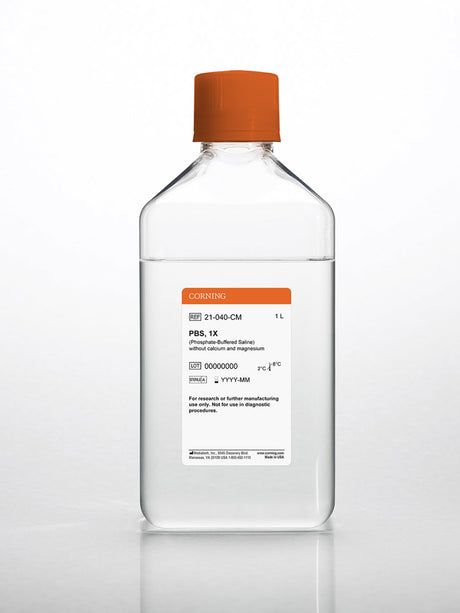
Follow your kit protocol first—this keeps your workflow aligned with the validation behind the assay. PBS-T or TBS-T with a mild detergent is common, but some assays require specific detergents or salt conditions. Use a fresh buffer, filter if needed, and avoid microbial growth by storing appropriately.
Prime and flush lines before a run
A bubble-free system supports even dispensing and clean aspiration. Prime the system so lines fill smoothly; this simple step often improves uniformity right away.
Check manifold alignment
Good alignment helps aspiration and dispensing stay uniform across the whole plate. A quick alignment check before a run keeps everything running smoothly and saves time later.
Confirm residual volume
After a wash cycle, do a quick visual check for leftover droplets so you can fine-tune settings confidently. If you see consistent residual liquid, a minor tweak to aspiration height (or adding a short final aspiration) often resolves it immediately.
ELISA Tips & Tricks for cleaner plates and lower background
These practical adjustments often improve results even when the assay chemistry is unchanged.
Tip 1: Add a short soak time for an extra-clean finish
A 20–60 second soak can help remove loosely bound conjugate and reduce background.
Tip 2: Increase wash cycles before detection
Many assays benefit most from extra washes right before adding substrate, when leftover conjugate has the most significant effect.
Tip 3: Keep wells comfortably wet between steps
Keeping wells from drying supports smoother binding behavior and helps edge wells stay consistent. Move smoothly from the wash to the next reagent step.
Tip 4: Match dispense volume to well capacity
A balanced dispense volume gives you an effective rinse while keeping handling neat and controlled. Follow kit guidance and confirm with quick visual checks; it’s an easy way to lock in consistency.
Tip 5: Use consistent aspiration height
A well-chosen aspiration height protects the plate surface and helps leave wells clean and uniform. Once you find the sweet spot, keep it consistent.
Tip 6: Manage foam and bubbles
Some detergents may foam slightly, which is easy to manage with the proper technique. Less foam usually means more efficient rinsing and more consistent wells. Gentle mixing and the right detergent concentration help keep washing efficient and repeatable.
Tip 7: Watch for edge effects
Edge wells can warm or cool faster. Use a plate sealer during incubations and keep plates away from drafts.
Tip 8: Keep the washer clean
Run rinse cycles and periodic deep cleaning per manufacturer guidance. A clean manifold supports stable, repeatable washing.
Troubleshooting quick guide
High background across the plate
This is often improved quickly by adding a wash cycle, including a brief soak, confirming wash buffer composition, and ensuring aspiration is complete.
High variability between replicates
Check for bubbles, dispense uniformity, plate coating consistency, and complete aspiration—minor adjustments here often bring replicates into tight alignment. Ensure the washer is primed and the manifold is aligned.
Edge wells behave differently.
Use sealers, minimize drying, and keep incubation temperature stable—these simple steps often make edge wells behave beautifully. Confirm wash steps don’t leave edge wells with more residual volume.
Low signal overall
In a few assays, powerful washing can reduce the signal slightly, especially if the binding is relatively weak. If needed, a slightly gentler aspiration, one fewer wash cycle, or confirming incubation timing often brings the signal back into a comfortable range.
ELISA applications where plate washing matters most
Some ELISA applications are susceptible to wash quality.
- Low-abundance biomarker detection in serum or plasma benefits tremendously from an extra-clean background, which is precisely where consistent washing shines.
- Competitive ELISAs can be sensitive to residual conjugate and require consistent wash timing.
- Multiplex-style workflows (when running many targets across plates) benefit from standardized wash protocols.
- QC or lot-release testing needs minimal operator variation, which makes automated washing very attractive.
Choosing a 96-well plate for ELISA: practical pairing with washer settings
If you switch to a different 96-well plate for ELISA, confirm the washer protocol still fits. Plate geometry can affect how aspiration tips interact with the well bottom. Flat-bottom plates usually pair well with standard manifolds. Some coated plates are more sensitive to scratching; ensure aspiration height is appropriate. If your plate has a high-binding surface, thoughtful washing and good blocking work together to keep nonspecific binding low and signals nicely separated. Astor Scientific supports labs that are standardizing ELISA workflows by helping teams source consistent microplates, buffers, and handling tools so protocols stay stable across projects and operators.
FAQ
What are ELISA Plate Washers used for?
They automate wash steps between ELISA incubations by dispensing a wash buffer and aspirating it with controlled timing. This improves consistency, lowers background, and saves time.
Do I always need a plate washer?
Not necessarily. For occasional ELISA use, careful manual washing can work very well—especially with consistent timing and thorough aspiration. If you run assays regularly, need high consistency, or struggle with background, a washer is often a substantial upgrade.
How many wash cycles should I use?
Follow the kit first. Many assays use 3–5 cycles, but some benefit from more washes before the detection/substrate step. A small optimization test can identify the best number.
Why do I get a high background even with many washes?
A few common factors can drive this, such as an aspiration that isn’t fully complete, a blocking that needs a minor tweak, wells drying between steps, a wash buffer composition, bubbles, or a manifold that needs a rinse cycle. A brief soak and confirming aspiration height often helps.
Can washing reduce my signal?
It can, in a small number of assays, if washing is more substantial than needed. If the signal drops, slightly gentler aspiration, one fewer wash cycle, and confirming incubation conditions often restore a strong, confident signal.
Conclusion
A plate washer doesn’t change the biology of your assay—it improves the consistency of the step that most directly controls background and reproducibility. With the correct settings, clean maintenance habits, and a few practical ELISA Tips & Tricks, you can turn a “good” ELISA into a smoother, more repeatable workflow. If your team is building a more standardized ELISA setup, Astor Scientific can support you with reliable consumables and lab-ready essentials that help ELISA Plate Washers, microplates, and reagents work together for confident, clean results.