The right ELISA kit should match your target analyte, species, sample type, expected concentration, sensitivity requirements, and laboratory workflow. Before ordering, confirm that the assay is validated for your intended matrix, such as serum, plasma, cell culture supernatants, or prepared tissue lysates.
ELISA assay kits are available for cytokines, growth factors, hormones, neurological biomarkers, veterinary targets, toxins, and other research analytes. Some formats support conventional laboratory workflows, while fast ELISA kits may reduce incubation or handling time. Because assay duration, sample volume, detection range, storage conditions, and protocol steps vary by product, always review the latest product-specific datasheet and confirm current availability before purchasing.
What Is an ELISA Kit?
An enzyme-linked immunosorbent assay, or ELISA, is a plate-based method used to detect or quantify a specific analyte in a biological sample. Depending on the assay design, the target may be a protein, cytokine, growth factor, hormone, antigen, antibody, toxin, or another biomarker.
A typical ELISA research kit may include:
- A coated microplate
- Standards or controls
- Sample and reagent diluents
- Target-specific detection reagents
- An enzyme conjugate
- Wash buffer
- Substrate and stop solutions
- Plate sealers
- A product-specific protocol
After the assay is completed, a compatible microplate reader measures the generated signal. Quantitative ELISA kits use a standard curve to calculate the concentration of the target analyte. Kit contents vary, so buyers should verify what is included and which additional laboratory reagents or equipment are required.
Which ELISA Kit Format Should You Choose?
The best format depends on your target, sample volume, assay schedule, required sensitivity, and preferred level of reagent preparation.
|
ELISA format |
Main advantage |
Best purchasing choice when |
Relevant product link |
|
Standard ELISA |
Familiar plate-based workflow |
You need a conventional protocol and the required target is available |
|
|
Fast ELISA |
Streamlined processing |
You need faster results or want to reduce hands-on time |
|
|
High-sensitivity ELISA |
Detection of low-abundance analytes |
Your cytokine, growth factor, or biomarker is expected at a low concentration |
|
|
Specialized ELISA |
Targeted species or application validation |
Your project requires a specialist assay for a species, toxin, residue, or biomarker |
Terms such as “fast,” “one-step,” and “ultra-sensitive” do not represent identical specifications across all products. Compare the actual protocol, incubation time, quantitative range, sensitivity, sample requirements, and validation data rather than choosing by format name alone.
How Does a Sandwich ELISA Work?
A sandwich ELISA uses two antibodies that recognize different regions of the same target. The capture antibody binds the analyte from the sample, and a detection antibody binds another accessible site. After washing and signal development, the plate is read, and the analyte concentration is calculated from the standard curve. This two-antibody design can provide strong target specificity for protein quantification. However, incubation, washing, reagent preparation, and plate-reading requirements must follow the selected kit’s instructions.

Match the Kit to Your Sample Type
Sample compatibility is a major purchasing factor. A kit validated for serum should not automatically be assumed suitable for plasma, cell culture supernatants, or tissue lysates.
Serum Samples
Serum is frequently used to quantify circulating cytokines, hormones, antibodies, growth factors, and disease-related biomarkers. Compare the expected concentration with the kit’s validated quantitative range. Highly concentrated samples may require dilution, while low-abundance targets may require a more sensitive assay.
Plasma Samples
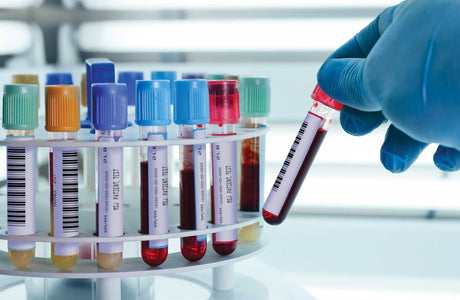
Plasma contains clotting proteins and other matrix components that may affect assay performance. Confirm whether the kit supports plasma and whether it is validated for the anticoagulant used during collection, such as EDTA, citrate, or heparin. Keep collection, centrifugation, storage, and freeze-thaw conditions consistent across the study.
Cell Culture Supernatants
ELISA kits commonly measure proteins secreted by cultured cells into collected cell culture supernatants; they do not normally test intact cultured cells directly. Before purchasing, consider the cell type, treatment period, serum content, expected secretion level, possible matrix interference, available volume, and storage conditions. Fast or low-volume formats may be useful for primary cells, organoids, limited culture systems, and experiments that produce small quantities of conditioned media. Required volume varies, so confirm it in the individual protocol.
Tissue Lysates
Selected ELISA assay kits can analyze prepared tissue lysates. Compatibility must be verified because detergents, salts, protease inhibitors, and extraction buffers may influence antibody binding or enzyme activity. Use a consistent preparation method and an appropriate normalization approach, such as total protein or tissue weight, across all specimens.

ELISA Kits for Cytokine Detection
Cytokine ELISA kits support immunology, inflammation, infection, oncology, and cell-signaling research. Cytokines may occur at low concentrations and can change rapidly after stimulation, treatment, or disease-related signaling. The listed catalog includes assays for targets such as IL-1β, IL-2, IL-4, IL-6, IL-10, IL-12, IL-17A, IL-18, IFN-γ, TNF-α, GM-CSF, and TGF-β1. Available species, matrices, formats, and specifications vary by target.
For example, the Human IL-6 ELISA is presented as a 96-well cytokine assay, while the Fast Mouse GM-CSF ELISA supports mouse cytokine research. Review the current product page and datasheet, and confirm ordering availability before scheduling an experiment.
When comparing ELISA kits for cytokine detection, review:
- Target and species specificity
- Validated sample matrices
- Quantitative range and sensitivity
- Recovery and dilution linearity
- Intra-assay and inter-assay precision
- Cross-reactivity data
- Required sample volume
- Total assay time

ELISA Kits for Growth Factor Analysis
Growth factor ELISA kits support research into cell proliferation, differentiation, immune regulation, tissue remodeling, angiogenesis, wound healing, and disease progression. Common targets include VEGF, TGF-β, EGF, FGF, IGF, PDGF, and colony-stimulating factors. The listed Fast Human TGF-β1 ELISA product page identifies a 96-well format and provides product-specific detection information. Buyers should review the latest datasheet to confirm the quantitative range, sensitivity, validated sample matrices, preparation requirements, and current availability.
Whenever practical, dilute samples so their readings fall within the kit’s validated quantitative range, ideally away from the extreme upper and lower ends of the standard curve.
Fast ELISA Kits for Time-Sensitive Workflows
A fast ELISA may reduce incubation periods, washing steps, or separate reagent-addition stages. These formats can help laboratories processing multiple plates, working with time-sensitive samples, or seeking a more streamlined protocol. The catalog lists fast assays for selected human cytokines, mouse biomarkers, equine hormones, neurological biomarkers, veterinary drug residues, and contaminants. Individual products do not share one universal assay duration or sample-volume requirement. Confirm the workflow, required equipment, sample volume, and storage conditions from the specific datasheet.
Human, Animal, and Specialized Research Kits
Species reactivity must match the origin of the sample. A human ELISA kit should not be used for mouse, canine, equine, or other animal samples unless the manufacturer documents suitable cross-reactivity or validation. The listed range covers human cytokine and biomarker analysis, mouse immune research, canine and equine targets, monkey cytokine research, veterinary drug-residue testing, mycotoxin analysis, and selected toxin-detection applications. Researchers should confirm the exact matrix validation, range, sensitivity, intended use, and order status for each selected product.
How to Select the Right ELISA Assay Kit
Use this checklist before purchasing:
- Confirm the exact target. Check the complete protein name, abbreviation, isoform, and relevant modification state.
- Match the species. Select an assay validated for the species from which the samples were collected.
- Verify the sample matrix. Confirm support for serum, plasma, cell culture supernatants, tissue lysates, or the intended alternative.
- Compare the quantitative range. Estimate the expected concentration using prior data, literature, or pilot testing.
- Review sensitivity and precision. Check the lower detection capability, recovery, dilution linearity, and intra- and inter-assay variation when available.
- Calculate sample and well requirements. Include standards, blanks, controls, duplicates, dilution trials, and possible repeat measurements.
- Compare workflow requirements. Review assay duration, incubation stages, washing steps, temperature requirements, equipment, and hands-on time.
- Check documentation and storage. Review the protocol, datasheet, COA availability, storage conditions, expiration information, kit contents, and shipping requirements.
- Confirm availability. Verify stock, price, lead time, and shipping arrangements before scheduling the assay.
Why Order ELISA Kits Through Astor Scientific?
Selecting a laboratory supplier involves more than comparing list prices. Product compatibility, documentation, technical assistance, and reliable procurement can directly affect the success and continuity of an assay.
Available purchasing support may include:
- Technical product-selection assistance
- Bulk-order discounts and contract pricing
- Lot-specific COAs and datasheets
- Specialty-kit sourcing assistance
- U.S. ordering and shipping assistance
- Scalable purchasing for ongoing projects
Researchers ordering multiple kits can ask whether one lot can be reserved for the study. For bulk or recurring requirements, request current pricing, quantity, lead time, documentation, and delivery options before placing the order.
Need Help Selecting an ELISA Kit?
Share your target analyte, species, sample type, expected concentration, available sample volume, number of samples, and preferred assay time. The Astor Scientific team can help identify a potentially compatible kit and provide current availability, documentation, technical assistance, and bulk-order information.
FAQs:
Which ELISA kit should I choose?
Choose a kit that matches your exact target, species, sample matrix, expected concentration, sensitivity requirement, and preferred workflow. Review the individual datasheet before ordering.
Can ELISA kits analyze serum and plasma?
Many ELISA kits support serum and plasma, but compatibility varies. Confirm the validated matrix and anticoagulant requirements for the individual assay.
Can ELISA kits be used with cell culture samples?
ELISA kits can measure analytes in cell culture supernatants or prepared cell lysates when those matrices are validated. They do not normally test intact cultured cells directly.
Are ELISA kits suitable for tissue lysates?
Selected kits support tissue lysates. Confirm compatibility with the extraction buffer and use a consistent normalization method.
What is a fast ELISA?
A fast ELISA uses a streamlined protocol to reduce assay time or handling. Exact incubation time, sample volume, and workflow vary by product.
How many samples fit on a 96-well plate?
Fewer than 96 independent samples are normally tested because standards, blanks, controls, duplicates, and dilution wells also use plate capacity.
Can I order ELISA kits in bulk?
Bulk discounts and contract pricing may be available. Contact the supplier with the kit name, catalog number, quantity, and required delivery schedule.
Could you please provide a COA or datasheet?
Buyers can request product or lot-specific documentation. Confirm that the supplied COA or datasheet applies to the exact product and lot being ordered.
Are these ELISA kits intended for clinical diagnosis?
Unless a product is specifically labeled and authorized for diagnostic use, treat it as research use only. Confirm the intended use on the individual product page and documentation.