Cytokine ELISA kits quantify individual cytokines in serum, plasma, cell culture supernatants, and other validated sample matrices. The right kit should match the target, species, expected concentration, sample type, available volume, assay schedule, and required documentation. Researchers commonly compare IL-1β, IL-2, IL-6, IL-10, IL-17A, IL-18, TNF-α, IFN-γ, GM-CSF, TGF-β1, and chemokine assays for immunology, inflammation, oncology, infection, and immunotherapy research. Product availability can change, so review the live product page and confirm stock before scheduling samples.
What Are Cytokine ELISA Kits?
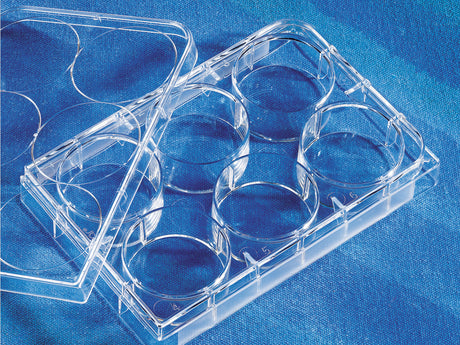
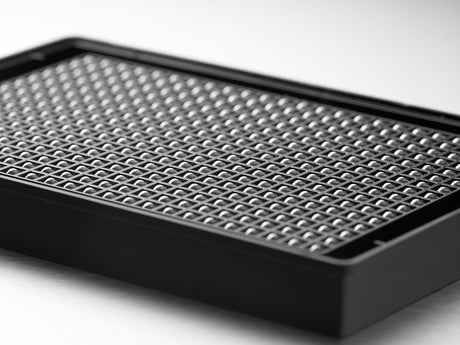
Cytokine ELISA kits are plate-based immunoassays designed to detect or quantify a selected signaling protein. A quantitative cytokine ELISA uses standards to create a calibration curve, allowing optical-density readings to be converted into concentrations such as pg/mL. A complete kit may contain a coated plate, standards, diluents, detection reagents, wash buffer, substrate, stop solution, plate sealers, and a product-specific protocol. Contents vary, so confirm whether any additional buffers, controls, equipment, or reagents are required.
Single-target ELISA kits are especially useful when the biomarker is already defined and focused quantitative data are needed. High sensitivity cytokine ELISA kits may help with low-abundance targets, but sensitivity should always be assessed together with the validated quantitative range, recovery, linearity, precision, and matrix data.
Cytokine ELISA Kits to Compare
Product availability may change. Confirm current stock, lead time, price, and documentation before placing an order. If a listed kit is unavailable, contact Astor Scientific for sourcing assistance or a suitable alternative. The specifications below reflect information shown on the linked live product pages when this article was reviewed. Reconfirm every specification against the latest datasheet before use.
|
Research requirement |
Product and catalog number |
Species |
Validated or listed matrices |
Plate size |
Listed price |
Assay time |
Quantitative range |
|
Human inflammatory cytokine release |
Human |
Cell culture supernatants, serum, plasma |
1 × 96-well plate |
$420 |
1 hour |
4–1,000 pg/mL; typical minimum detectable dose 3.0 pg/mL |
|
|
Human immune regulation and remodeling |
Human |
Cell culture supernatants, serum, plasma |
One 96-well plate per product description |
$450 |
Within 2 hours |
10–4,000 pg/mL |
|
|
Mouse myeloid-cell signaling |
Mouse |
Tissues, serum, and other biological samples listed on page |
1 × 96-well plate listed as size* |
$320 |
2 hours |
7.8–500 pg/mL |
|
|
Human Th17-related response |
Human |
Cell culture supernatants, serum, plasma |
1 × 96-well plate |
$390 |
1 hour |
8–2,000 pg/mL |
|
|
Human inflammatory and inflammasome research |
Human |
Cell culture supernatants, serum, plasma |
Confirm on current page |
Confirm current price |
2 hours |
8–2,000 pg/mL |
*The GM-CSF page displays a one-plate size near the order field but also contains conflicting text about materials for three plates. Confirm the supplied plate count before ordering. Prices and availability are time-sensitive. “Unavailable” products are included for technical comparison and sourcing inquiries, not as immediately purchasable recommendations.
Check Availability or Request a Quote
How Cytokine Release ELISA Assays Work
A sandwich cytokine ELISA can be summarized in four steps:
- Add standards, controls, and samples to the antibody-coated plate.
- Incubate and wash according to the kit protocol, then add the specified detection reagents.
- Develop the enzyme-generated signal and read the plate at the required wavelength.
- Calculate sample concentrations from the validated standard curve.
The exact reagent order, wash schedule, incubation time, and calculation method vary by product. Use the current protocol consistently across experimental groups and batches.

How to Select a Cytokine ELISA Kit
Start With the Target and Biological Question
Choose targets that answer the experimental question. IL-1β, IL-6, and TNF-α are frequently associated with inflammatory signaling; IL-2 and IFN-γ with T-cell activation; IL-17A with Th17 biology; GM-CSF with myeloid-cell signaling; and TGF-β1 with immune regulation and tissue remodeling. Cytokines are signaling proteins, chemokines primarily guide cell migration, and growth factors influence proliferation, differentiation, survival, or repair. These groups overlap biologically, but each assay should be chosen for a defined hypothesis. A focused panel can reduce reagent costs and simplify interpretation.
Match the Species and Sample Matrix
Antibody recognition is species-dependent. Do not use a human kit for mouse, canine, equine, or monkey samples unless appropriate cross-reactivity is documented. Next, confirm validation for the exact matrix: serum, plasma, cell culture supernatants, prepared cell lysates, tissue lysates, or another sample type. Cytokine release assays usually analyze collected culture supernatants rather than intact cells. Media supplements, anticoagulants, extraction buffers, storage conditions, and repeated freeze-thaw cycles may affect results.
Compare Range, Sensitivity, and Sample Volume
Estimate the expected concentration using prior experiments, literature, or a pilot study. Select a quantitative range that can accommodate the samples with practical dilution. Ideally, readings should remain within the validated range and away from its extremes. For low-abundance biomarkers, compare the minimum detectable dose with matrix-specific performance, recovery, dilution linearity, intra-assay precision, and inter-assay precision. Also calculate the volume required for duplicates, dilution trials, controls, and repeat testing.
Calculate Plates and Total Project Cost
A 96-well plate does not normally test 96 independent samples because standards, blanks, controls, and duplicates consume wells. Prepare a plate map before requesting a quote. For recurring experiments, compare the total cost per usable sample rather than the kit price alone. Provide the number of samples, replicates, time points, expected dilutions, and required plates. This information helps the supplier confirm quantity, lead time, and whether a recurring-order arrangement is appropriate.
Review Workflow, Stock, and Documentation
Before purchasing, verify:
- Catalog number and plate size
- Current price, stock status, and lead time
- Total assay duration and hands-on steps
- Quantitative range and sensitivity
- Validated sample matrices and recommended dilutions
- Recovery, linearity, precision, and specificity data
- Protocol, datasheet, and certificate of analysis when applicable
- Storage conditions, expiration information, and shipping requirements
Not sure which cytokine ELISA kit fits your samples? Share your target, species, sample matrix, expected concentration, and required number of plates to request product-selection assistance.

ELISA vs ELISpot, Multiplex, and Automated ELISA
ELISA measures the concentration of a selected analyte in a liquid sample. ELISpot assays count individual cells secreting a target and report spot-forming cells or units. A cytokine ELISA may show how much IFN-γ accumulated in a supernatant, while ELISpot estimates how many cells secreted it.
Multiplex immunoassays measure several cytokines or chemokines from one sample and can support broad screening. Single-target ELISA provides focused quantification when the biomarker is already known. Automated ELISA can reduce repetitive handling, but the plate, reagent volumes, wash settings, incubation conditions, and reader configuration must be compatible with the platform.
Complete Cytokine ELISA Kits vs Development Sets
Researchers comparing Quantikine ELISA kits or DuoSet ELISA products are often deciding between complete, preconfigured assays and development-style reagent sets. A complete kit can simplify procurement by supplying the coated plate and major assay reagents. A development set may offer flexibility but can require separate plates, buffers, optimization, and validation. Compare the included components, required optimization, sample matrix, quantitative range, assay time, documentation, and full cost per usable sample. If a preferred format is not listed or is unavailable, ask about a compatible complete kit or sourcing alternative.
Cytokine Release Assays for Immunotherapy Research
Cytokine release is studied in work involving T cells, NK cells, engineered immune cells, bispecific antibodies, and other immune-activating approaches. Panels may include IL-2, IL-6, IL-10, IFN-γ, TNF-α, GM-CSF, chemokines, and growth factors. Cytokine release syndrome (CRS) is a clinical condition requiring medical assessment and management. Research-use-only immunoassays may support preclinical cytokine release studies, but they should not be presented as diagnostic tests unless specifically authorized for that purpose. Consistent sampling times, processing, storage, and thawing improve comparability because different biomarkers may peak at different stages.
Ordering for Bulk or Recurring Projects
Astor Scientific lists cytokine and biomarker immunoassays and provides product-selection assistance. For multi-plate or multi-phase studies, request current price, available quantity, lead time, documentation, and U.S. ordering and shipping assistance before finalizing the experiment.
Lot reservation may help reduce lot-to-lot variation across a long project, but it should never be assumed. Ask whether a specific lot can be reserved, how many kits are available, and how long the reservation can be held. Confirm the arrangement in writing before committing samples or timelines.
Submit a Bulk Order or Recurring Supply Inquiry
FAQs
Which ELISA kit is best for cytokine detection?
Choose a kit that matches the target, species, validated matrix, expected concentration, sensitivity, volume, and workflow. Confirm current stock and documentation before ordering.
Can cytokine ELISA kits measure release from cultured cells?
Yes. A kit validated for cell culture supernatants can quantify cytokines released into collected media. Check for potential interference from serum, supplements, and treatment compounds.
What is a high-sensitivity cytokine ELISA kit?
It is designed to measure relatively low analyte concentrations. Compare the validated range, recovery, linearity, precision, and matrix data as well as the stated detection limit.
Is ELISpot the same as cytokine ELISA?
No. ELISA measures analyte concentration in a liquid sample; ELISpot measures the frequency of cells secreting the target.
How many samples fit on a 96-well plate?
The number depends on standards, blanks, controls, duplicates, and dilution wells. A plate map is required to calculate usable sample capacity accurately.
Can I request bulk pricing or lot reservation?
Ask for bulk or recurring-order pricing using the catalog number, quantity, and schedule. Lot reservation should be treated as subject to written availability confirmation.
Compare Cytokine ELISA Kits Before Ordering
The best purchasing decision combines scientific fit with practical procurement. Compare the target, species, matrix, quantitative range, sensitivity, plate requirements, assay time, documentation, current stock, lead time, and total project quantity.
If a preferred product is unavailable, request sourcing assistance or a technically suitable alternative rather than scheduling the study around an unconfirmed kit. Astor Scientific can also help with documentation, multi-plate requirements, and recurring supply planning. Request Availability, a Quote, or an Alternative