Collecting samples for laboratory testing is one of the most important steps in the diagnostic and research workflow. Before a sample reaches an analyzer, PCR platform, ELISA plate, microscope, centrifuge, or molecular biology workstation, its quality is shaped by how it was collected, labeled, stored, and transported.
A well-collected sample supports reliable laboratory testing, accurate diagnostic testing, strong quality control, and efficient research productivity. A poorly collected sample can lead to contamination, sample rejection, delayed reporting, repeated testing, and reduced confidence in results. This makes sample collection more than a routine task; it is a foundation of scientific excellence.
For clinical laboratories, diagnostic laboratories, universities, biotech companies, pharmaceutical labs, research institutions, and academic laboratories, the right sample collection process helps protect sample integrity from the beginning. The right container, tube, preservative, swab, transport system, label, and storage condition can support better testing performance and smoother laboratory operations.
What Is Sample Collection for Laboratory Testing?
Sample collection for laboratory testing is the process of obtaining a biological, chemical, environmental, or research specimen so it can be analyzed in a laboratory. The sample may be blood, urine, stool, saliva, sputum, swab material, tissue, cell culture material, DNA, RNA, protein extract, or another specimen type.
In clinical laboratory testing, sample collection helps detect, monitor, or investigate health-related conditions. In scientific research, it supports discovery in molecular biology, biotechnology, cell culture, protein analysis, DNA research, RNA research, quality control, and product development.
A strong sample collection process includes:
- Correct patient or sample identification
- Correct container or tube selection
- Clean and safe collection technique
- Proper sample volume
- Accurate labeling
- Suitable storage temperature
- Stable transport conditions
- Clear documentation
- Timely delivery to the laboratory

Why Sample Collection Matters
Laboratory testing depends on the quality of the sample. Even advanced scientific instruments cannot fully correct a sample that was collected in the wrong container, mislabeled, contaminated, exposed to the wrong temperature, or delayed during transport.
Correct sample collection supports:
- Research accuracy
- Diagnostic confidence
- Reliable clinical laboratory testing
- Strong quality control
- Efficient laboratory workflows
- Lower sample rejection rates
- Better patient and research outcomes
- Improved laboratory safety
- Cost optimization
- Scientific advancement
For laboratories, sample collection is a key part of the pre-analytical phase. The pre-analytical phase includes everything that happens before the sample is tested, including preparation, collection, handling, transport, and storage. This phase is essential because many laboratory errors occur before analysis begins.
Common Sample Types Used in Laboratory Testing
|
Sample Type |
Common Uses |
Important Collection Factors |
|
Urine |
Urinalysis, culture, toxicology, kidney markers, pregnancy testing |
Clean container, midstream collection, preservative or refrigeration when required |
|
Blood |
Hematology, chemistry, serology, molecular testing, blood culture |
Correct tube type, anticoagulant, order of draw, labeling, safe sharps handling |
|
Stool |
Gastrointestinal testing, occult blood, pathogens, parasites, PCR assays |
Clean container, no urine/water contamination, correct preservative |
|
Saliva |
PCR testing, hormone testing, genetic testing, non-invasive screening |
Stabilization, contamination control, transport compatibility |
|
Sputum |
Respiratory testing, microbiology, molecular diagnostics |
Proper specimen type, sterile container, biosafety handling |
|
Swabs |
Microbiology, respiratory testing, wound testing, molecular assays |
Correct swab type, transport medium, collection site accuracy |
|
Tissue |
Histology, pathology, molecular research, biobanking |
Fixative, sterile handling, cold chain, traceability |
|
Contamination checks, viability, molecular studies |
Aseptic technique, sterile tools, controlled storage |
How to Collect Urine Samples for Laboratory Testing
Urine sample collection is commonly used for urinalysis, urine culture, pregnancy testing, kidney function markers, toxicology, and diagnostic testing. The correct method depends on the test being ordered.
Clean-Catch Midstream Urine Collection
Clean-catch midstream urine is commonly used to reduce contamination from skin or external surfaces.
General process:
- Wash your hands thoroughly.
- Use the sterile or clean collection cup provided by the laboratory.
- Avoid touching the inside of the container or lid.
- Clean the collection area if instructed.
- Begin urinating into the toilet.
- Collect the middle part of the urine stream in the container.
- Close the lid tightly.
- Label the sample with the required identification details.
- Deliver it to the laboratory within the required time window.
Important Urine Collection Tips
- Use the correct urine container for the test.
- Do not overfill the container.
- Do not touch the inside of the cap or cup.
- Follow timing instructions for random, first-morning, timed, or 24-hour urine samples.
- Refrigerate or use preservative tubes when required by the test protocol.
- Record collection date and time clearly.
How to Collect Stool Samples Correctly
Stool sample collection is used for gastrointestinal testing, parasite detection, bacterial culture, viral testing, fecal occult blood testing, inflammatory markers, and molecular diagnostics. Correct stool collection helps protect sample quality and reduces interference.
General process:
- Use the container or collection kit provided by the laboratory.
- Avoid mixing stool with urine, toilet water, soap, or cleaning products.
- Collect the required amount using the provided tool.
- Place the sample into the correct container or preservative vial.
- Secure the lid tightly.
- Label the container with identification, date, and collection time.
- Store and transport the sample as instructed.
Important Stool Collection Tips
- Do not collect stool directly from the toilet water.
- Use only the approved container or collection system.
- Some tests require fresh stool, while others require preservatives.
- Some tests may require multiple samples on different days.
- Follow laboratory-specific instructions for temperature and timing.
Blood Sample Collection Procedure
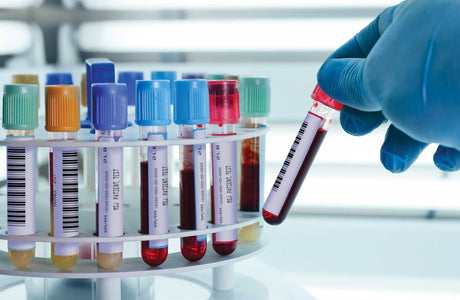
Blood sample collection is used in clinical laboratory testing, diagnostic testing, research studies, blood chemistry, hematology, immunology, serology, molecular biology, and quality control workflows. Blood collection should be performed by trained personnel using proper laboratory safety procedures.
General procedure:
- Confirm sample request and patient or subject identification.
- Prepare required tubes, needles, labels, gloves, tourniquet, antiseptic, and sharps container.
- Perform hand hygiene and wear appropriate PPE.
- Select the correct collection tube based on the test.
- Clean the venipuncture site with an approved antiseptic.
- Collect blood using the correct method and the required tube order.
- Fill tubes to the proper volume.
- Mix the additive tubes gently if required.
- Label tubes immediately after collection.
- Dispose of needles and sharps safely.
- Store and transport the specimen according to test requirements.
Important Blood Collection Tips
- Use the correct tube type and additive.
- Avoid underfilling tubes that require anticoagulant ratios.
- Avoid excessive tourniquet time.
- Prevent hemolysis by using proper technique.
- Do not shake tubes aggressively.
- Label specimens at the point of collection.
- Follow biosafety and sharps safety procedures.
Sample Collection and Pre-Analytical Quality
The pre-analytical phase is one of the most important areas of laboratory quality control. It includes patient preparation, sample collection, labeling, transport, storage, processing, and sample acceptance.
Common pre-analytical issues include:
- Wrong container
- Incorrect sample volume
- Poor labeling
- Delayed transport
- Hemolysis in blood samples
- Urine contamination
- Stool mixed with urine or water
- Wrong storage temperature
- Incomplete documentation
- Incorrect preservative
- Leaking containers
- Expired collection supplies
A strong pre-analytical workflow improves diagnostic testing accuracy, protects sample stability, and supports laboratory success.
Sample Collection Supplies and Their Uses
|
Collection Product |
Main Use |
Key Selection Factor |
|
Urine cups |
Urinalysis and urine culture |
Sterility, leak resistance, volume marking |
|
Urine tubes |
Transport and preservation |
Preservative type, test compatibility |
|
Blood collection tubes |
Hematology, chemistry, molecular testing |
Additive, draw volume, tube material |
|
Capillary blood tools |
Point-of-care and small-volume collection |
Safety, volume precision, ease of use |
|
Stool containers |
GI testing and pathogen detection |
Leakproof design, preservative compatibility |
|
PCR, genetic, hormone, and non-invasive testing |
Stabilization, sterility, sample volume |
|
|
Swabs |
Microbiology and molecular testing |
Swab material, transport medium |
|
Transport bags |
Safe sample handling |
Biohazard labeling, leak containment |
|
Labels and barcodes |
Traceability |
Adhesion, readability, LIS compatibility |
Applications in Clinical and Research Laboratories
Clinical Laboratory Testing
Clinical laboratories use sample collection products for routine testing, diagnostic testing, monitoring, infectious disease testing, and specialized assays. Reliable collection improves result quality and turnaround time.
Diagnostic Testing
Diagnostic testing depends on sample integrity. Correct collection, transport, and storage help protect analytes, microorganisms, cells, nucleic acids, and proteins.
Molecular Biology
PCR, qPCR, DNA research, RNA research, and sequencing workflows require high-quality samples. Collection tubes, swabs, preservatives, and transport conditions must protect nucleic acid stability and reduce contamination.
ELISA and Protein Analysis
ELISA and protein analysis workflows depend on sample stability and proper handling. Blood, serum, plasma, saliva, and other biological fluids may require specific storage temperatures and collection materials.
Cell Culture and Biotechnology
Cell culture and biotechnology workflows require aseptic technique and clean sample handling. Collection products should support Sterility, traceability, and research accuracy.
Buying Guide: How to Choose Sample Collection Supplies
Choosing sample collection supplies is a scientific procurement decision. The best product is the one that matches the test method, sample type, workflow, safety requirements, and storage conditions.
1. Match the Container to the Sample Type
Urine, stool, blood, saliva, sputum, swabs, and tissue samples all require different collection systems. Select containers designed for the specific specimen type.
2. Check Test Compatibility
Some tests require preservatives, anticoagulants, stabilizers, sterile containers, or specific transport media. Always match the product to the test protocol.
3. Prioritize Sample Stability
Sample stability is essential for reliable diagnostic testing. Choose products that help preserve cells, DNA, RNA, proteins, analytes, or microorganisms as required.
4. Review Safety Features
Look for leakproof caps, biohazard-compatible transport bags, sharps safety features, clear labeling surfaces, and durable packaging.
5. Confirm Sterility Requirements
Sterile sample collection products are important for microbiology, molecular testing, cell culture, and contamination-sensitive workflows.
6. Consider Workflow Efficiency
Good collection supplies should be easy to label, easy to transport, compatible with racks or automation, and simple for staff or patients to use.
7. Balance Quality and Cost
Cost optimization should not compromise sample quality. Labs can reduce waste by selecting reliable products that minimize recollection, rejection, and repeat testing.
Expert Insights
The most reliable laboratories treat sample collection as part of the testing system, not a separate administrative step. A sample is only useful when it is correctly identified, collected in the right container, preserved properly, transported safely, and accepted by the laboratory under defined quality standards.
For high-value workflows such as PCR, ELISA, cell culture research, diagnostic testing, protein analysis, DNA research, and RNA research, strong collection practices protect the entire downstream process. The best laboratories build quality into the first step.
Common Mistakes to Avoid
- Using the wrong tube or container
- Failing to label the sample immediately
- Collecting an insufficient sample volume
- Mixing stool with urine or toilet water
- Touching the inside of a sterile urine container
- Delaying sample transport without proper storage
- Using expired collection supplies
- Ignoring preservative requirements
- Shaking blood tubes aggressively
- Storing temperature-sensitive samples incorrectly
- Skipping PPE during biological sample handling
- Using non-sterile tools for contamination-sensitive testing
FAQS
1. What is sample collection in laboratory testing?
Sample collection is the process of obtaining a specimen such as blood, urine, stool, saliva, sputum, swab material, or tissue for laboratory analysis.
2. Why is sample collection important?
Sample collection is important because sample quality affects laboratory testing accuracy, diagnostic confidence, and research reliability.
3. What are common sample types used in laboratory testing?
Common sample types include blood, urine, stool, saliva, sputum, swabs, tissue, serum, plasma, and cell culture material.
4. How do you collect urine samples for laboratory testing?
Urine samples are commonly collected in a clean or sterile container. For clean-catch collection, the middle part of the urine stream is collected after the initial flow is passed.
5. How do you collect stool samples correctly?
Stool samples should be collected in a clean container or kit without mixing with urine, toilet water, or cleaning products.
Conclusion
Collecting samples for laboratory testing is a critical foundation for reliable science and accurate diagnostics. Whether the sample is urine, stool, blood, saliva, sputum, tissue, or swab material, correct collection protects sample integrity and supports high-quality laboratory results.For clinical laboratories, research institutions, biotech companies, pharmaceutical labs, academic laboratories, and diagnostic testing providers, strong sample collection practices improve quality control, reduce errors, increase efficiency, and support scientific excellence.
The best approach combines trained personnel, clear instructions, dependable collection supplies, correct labeling, safe storage, and timely transport. By choosing the right tools and following best practices, laboratories can strengthen research accuracy, diagnostic confidence, and long-term laboratory success.