The right 96-well deep-well plate should provide enough working capacity and mixing headspace, fit the liquid-handling equipment, support sample recovery, and accept a suitable seal. Lower-volume plates suit compact storage, 2–2.2 mL formats support many extraction workflows, and larger formats provide additional processing capacity. Round wells support smooth liquid handling, while square wells maximize capacity within the plate footprint. Silicone mats provide secure closure for compatible plates, while adhesive films suit many storage and processing steps.
96-Well Deep-Well Plate Selection at a Glance
|
Selection factor |
Available choices |
Buying guidance |
|
Well volume |
0.4, 1, 1.6, 2, 2.2, 3.5 and 4.6 mL options |
Select for total reaction volume plus mixing and sealing headspace |
|
Well shape |
Round or square |
Match recovery, capacity, mixing and automation requirements |
|
Bottom shape |
U-bottom |
Supports sample concentration toward the well center and efficient aspiration |
|
Material |
Polypropylene |
Suitable for many storage, extraction and liquid-handling workflows |
|
Sterility |
Sterile or non-sterile options, depending on product |
Match the plate to sample and protocol requirements |
|
Sealing |
Adhesive film or silicone sealing mat |
Select for storage duration, mixing, access frequency and temperature |
|
Equipment fit |
Multichannel pipettes and automated systems |
Confirm plate height, footprint, gripper access and deck clearance |
Compare 96-Well Deep-Well Plates from Astor Scientific
|
Product |
Catalog number |
Configuration |
Potential workflow fit |
Action |
|
NEST round-well U-bottom deep-well plate |
AS-501162 |
0.4, 1, 2 and 3.5 mL variants |
Flexible-volume storage, extraction and automated processing, subject to protocol and instrument compatibility |
|
|
NEST square-well U-bottom deep-well plate |
AS-501062 |
1, 1.6, 2.2 and 4.6 mL variants |
Higher-capacity extraction, precipitation and automated workflows, subject to protocol and instrument compatibility |
|
|
Biologix 2.2 mL square-well deep-well plate |
02-1022 |
96 wells, 2.2 mL, U-bottom, non-sterile |
Automated DNA extraction and sample processing, subject to protocol and instrument compatibility |
Review each product page to confirm configuration, packaging, price, and ordering status.
What Is a 96-Well Deep-Well Plate?
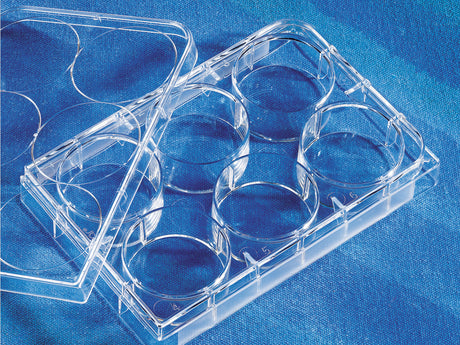
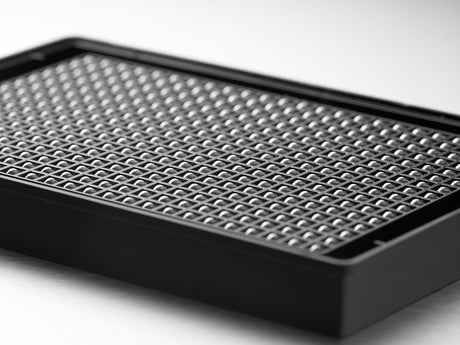
A 96-well deep-well plate contains 96 wells in an 8 × 12 layout. Its added depth supports storage, extraction, dilution, magnetic-bead processing, protein precipitation, and automated sample preparation.
How to Choose the Correct Well Volume
Maximum capacity is not automatically the recommended working volume. Calculate the highest combined sample and reagent volume, then retain headspace for pipetting, mixing and sealing.
0.4 to 1 mL Plates
Lower-volume plates suit compact storage, small reactions, and reagent preparation when a 2 mL plate is unnecessary.
1.6 to 2.2 mL Plates
These formats balance capacity with standardized 96-well handling. They suit nucleic acid extraction, magnetic-bead workflows, protein precipitation and automated preparation. A 2.2 mL plate adds headspace when samples are combined with lysis or precipitation reagents.
3.5 to 4.6 mL Plates
Higher-capacity wells support larger sample inputs and reagent additions. Confirm that the increased height fits the centrifuge, shaker, automated deck, and storage system.

Round Wells vs Square Wells
Geometry affects plate capacity and liquid movement.
Choose Round Wells
Round wells support smooth aspiration, dispensing and liquid movement. The NEST listing provides several capacities, allowing buyers to retain the same general geometry while selecting a protocol-appropriate volume.
Choose Square Wells
Square wells provide greater capacity within the available footprint and suit high-volume reagent addition, extraction and precipitation. The NEST listing extends to 4.6 mL, while the Biologix option provides a defined 2.2 mL format.
Need Help Matching Plate Geometry to Your Workflow?
Compare Astor Scientific’s round- and square-well deep-well plates, or contact the team to discuss volume, sealing, and automation requirements.
View Deep-Well Plate Options | Contact Astor Scientific

Why U-Bottom Geometry Matters
A U-bottom guides liquid toward the center, supporting resuspension and providing a consistent aspiration area. Optimized tip positions can help limit residual liquid. Consider tip depth, aspiration speed, magnetic-bead position, residual-volume target and automated liquid settings. When replacing a plate, compare the complete well profile because an equal-capacity plate may require different aspiration heights.
Polypropylene, Temperature and Chemical Compatibility
The NEST round-well page lists USP Class VI polypropylene, −80°C to 120°C use, autoclave capability, centrifugation up to 3,000 × g, and DNase/RNase-free and non-pyrogenic attributes. The Biologix 2.2 mL plate lists medical-grade polypropylene, resistance to alcohols and mild organic solvents, SBS conformity, and autoclave capability. Confirm compatibility with the protocol’s solvent concentration, temperature, centrifugal force, exposure time, seal, and expected sample expansion.
How to Select a Deep-Well Plate Seal
An effective seal helps control evaporation, splashing and cross-well transfer. Select according to temperature, storage duration, mixing and access frequency.
Silicone Sealing Mats
Silicone mats create individual closures across compatible wells and can be useful for storage, mixing and workflows requiring repeated access. Astor Scientific lists a sterile square-well silicone sealing mat and a puncturable square-well silicone sealing mat. The listed NEST mats use research-grade silicone and are described as autoclavable. The puncturable version supports access through the seal. Confirm exact plate compatibility before ordering.

Adhesive Sealing Films
Adhesive films provide a convenient seal for many storage and processing applications. Selection should account for plate material, temperature, chemical exposure, required optical properties, piercing needs and removal method. Apply films evenly to a clean, dry plate rim. Review Astor Scientific’s PCR and Microplate Adhesive Films for sealing options.
Automation and Equipment Compatibility
An SBS/ANSI-style footprint supports standardized workflows, but buyers should still confirm height, skirt design, rigidity and well position. Verify compatibility with robotic grippers, liquid-handler decks, multichannel pipettes, shakers, centrifuge adapters, magnetic stands, plate sealers and storage racks. A small evaluation before case-level purchasing can confirm aspiration, sealing, mixing and equipment clearance.

96-Well Deep-Well Plate Buying Checklist
Before selecting a plate, confirm:
- Maximum liquid volume reached during the protocol
- Required working headspace
- Round or square wells
- U-bottom compatibility
- Polypropylene grade, sterility and cleanliness requirements
- Required centrifugal force and temperature range
- Autoclaving requirement, where applicable
- Silicone mat or adhesive-film compatibility
- Multichannel, robotic and SBS/ANSI compatibility
- Pack and case quantity
- Product documentation and current ordering status
Compare Deep-Well Plates and Sealing Accessories
Astor Scientific’s plasticware collection brings together deep-well plates, sealing products, and related liquid-handling supplies. Buyers can compare round- and square-well formats, shortlist a suitable capacity, and identify an appropriate sealing method. Product availability may vary, so review the current listings or contact the team before procurement.
Compare Deep-Well Plate Specifications
Review available configurations or contact Astor Scientific for current availability, compatible sealing options, and procurement assistance.
Frequently Asked Questions
What volume 96-well deep-well plate should I choose?
Choose a capacity above the maximum combined sample and reagent volume. Include enough headspace for mixing, shaking, pipetting and sealing. The 2–2.2 mL range suits many routine extraction workflows, while smaller or larger formats support protocol-specific needs.
Are square wells better than round wells?
Each geometry serves a different workflow. Square wells maximize capacity within the plate footprint, while round wells support smooth liquid movement and consistent aspiration. Use the shape specified by the protocol and compatible equipment.
What is the benefit of a U-bottom deep-well plate?
A U-bottom directs liquid toward the center, supporting resuspension and efficient aspiration. Tip position and liquid-handling settings should be optimized for the selected plate.
Should I use sealing film or a silicone mat?
Use a compatible silicone mat for secure individual-well closure and workflows involving repeated access. Adhesive films are convenient for many storage and processing steps. Select according to temperature, chemicals, mixing intensity and access needs.
Are 96-well deep-well plates compatible with automated systems?
Many are designed for automated workflows and follow SBS/ANSI footprint conventions. Confirm plate height, rigidity, skirt design, well geometry, gripper access and deck clearance with the specific instrument before purchasing.
Conclusion:
Selecting a 96-well deep-well plate starts with total liquid volume and required headspace. Round wells provide smooth liquid handling, while square wells offer greater capacity within the plate footprint. U-bottom geometry supports centralized aspiration, and polypropylene construction provides a versatile foundation for many extraction, storage and automated workflows. Complete the selection by confirming sealing compatibility, plate height, centrifugal strength, temperature range and equipment fit. Matching all these specifications creates a more efficient purchasing decision and a dependable high-throughput workflow.