Serum-free media is an important option for researchers who want more control over cell culture conditions. In many traditional workflows, cell culture media is supplemented with animal serum, especially Fetal bovine serum, because it provides growth factors, proteins, hormones, attachment factors, and other components that support cell survival and growth. While FBS is valuable and widely used, it is also a complex biological material that can vary from lot to lot.
For experiments where consistency matters, serum-free media can help reduce unknown variables and improve reproducibility. It is especially useful in assay development, drug screening, protein expression, cell biology, and workflows where serum components may interfere with results. This guide explains what serum-free media is, why researchers use it, how it differs from defined media, and what to consider before switching cell lines from FBS-containing media to serum-free conditions.
What Is Serum-Free Media?
Serum-free media is cell culture media formulated without animal serum. Instead of using FBS or another serum source, it contains selected nutrients and supplements designed to support cells under more controlled conditions.
Depending on the formulation, serum-free media may include:
- Amino acids
- Vitamins
- Inorganic salts
- Glucose or another energy source
- Buffering agents
- Growth factors
- Hormones
- Lipids or fatty acids
- Recombinant proteins
- Trace elements
- Attachment-supporting components
The goal is to provide what cells need without relying on the broad and variable composition of serum. Some serum-free formulations are designed for specific cell lines, while others support broader cell types or specialized applications.
Why Is Fetal Bovine Serum Used in Cell Culture?
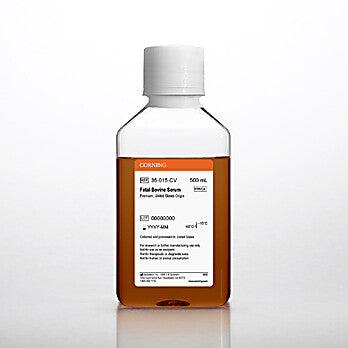
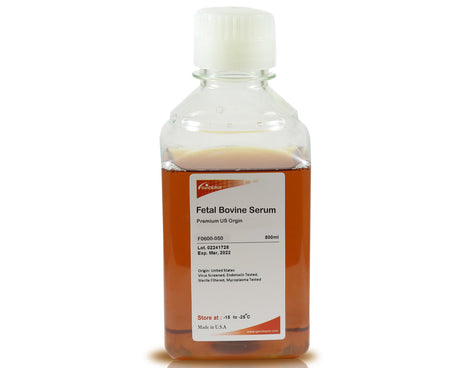
Fetal bovine serum has been used in cell culture for decades because it supports the growth of many mammalian cell lines. FBS contains a rich mixture of proteins, hormones, growth factors, vitamins, lipids, and attachment factors. These components help cells attach, recover after passaging, survive stress, and proliferate in vitro.
For routine cell culture, FBS-containing media can be practical and reliable when the cell line is already validated for that condition. Many common protocols use media such as DMEM or RPMI supplemented with 5–10% FBS.
However, FBS is not chemically defined. Its exact composition can vary depending on source, collection, processing, and lot. This variation may affect sensitive experiments, which is one reason researchers consider serum-free or defined media.
Why Use Serum-Free Media Instead of FBS?
Researchers use serum-free media instead of FBS when they need more consistent and controlled experimental conditions. FBS is helpful, but it can introduce unknown components that influence cell behavior, assay readouts, protein analysis, or downstream workflows.
Serum-free media may be a better choice when the goal is to:
- Reduce lot-to-lot variability
- Improve experimental reproducibility
- Minimize serum-derived interference
- Create more controlled cell culture conditions
- Simplify downstream protein or metabolite analysis
- Support defined assay development
- Reduce dependence on animal serum
- Standardize long-term workflows
Featured snippet answer: Researchers use serum-free media instead of FBS to reduce serum variability, improve reproducibility, create more defined culture conditions, and reduce interference from unknown serum components.
Serum-Free Media vs Defined Media
Serum-free media and defined media are related, but they are not always the same thing.
Serum-free media means the formulation does not contain animal serum. However, it may still include proteins, growth factors, hydrolysates, or supplements that are not fully chemically defined.
Defined media, often called chemically defined media, contains known components at known concentrations. This gives researchers stronger control over culture conditions.
|
Media Type |
Meaning |
Best Use |
|
Serum-free media |
Contains no animal serum |
Reducing FBS-related variability |
|
Defined media |
All components are known and controlled |
High-reproducibility experiments |
|
Animal-component-free media |
Contains no animal-derived components |
Workflows needing animal-origin-free conditions |
|
FBS-containing media |
Basal media plus Fetal bovine serum |
Routine growth of many established cells |
Benefits of Chemically Defined Cell Culture Media
The benefits of chemically defined cell culture media are strongest when experiments require precision and consistency. Because each component is known, researchers can better understand what cells are exposed to and how media composition may influence results.
Key benefits include:
- More consistent formulation
- Lower biological variability
- Easier troubleshooting
- Better comparison across experiments
- Cleaner downstream analysis
- Reduced background from serum proteins
- Improved control over cell signaling studies
- Stronger documentation for standardized workflows
For biotech R&D teams, defined conditions can be especially useful in assay development, screening, and long-term workflow optimization. For academic researchers, they can help make experimental interpretation clearer and more reproducible.
How Serum-Free Media Improves Reproducibility in Experiments
Reproducibility is one of the main reasons researchers move toward serum-free conditions. In serum-containing media, changes in serum lot can affect cell growth, morphology, signaling, metabolism, and assay performance. Even when cells look healthy, small differences in serum composition may influence results.
Serum-free media improves reproducibility by reducing unknown serum-derived variables. When the media formulation is consistent, researchers can better compare results between passages, lots, experiments, and team members.
This is useful for:
- Drug response studies
- Cell signaling experiments
- Protein expression workflows
- Secreted protein analysis
- Metabolic studies
- Stem cell or differentiation workflows
- Long-term assay development
- Cell-based screening
Which Cell Lines Can Use Serum-Free Media?
Not all cell lines respond the same way to serum-free media. Some cell lines grow well in serum-free formulations, while others need adaptation or may require specialized supplements.
Serum-free media is often used with:
- Hybridoma cells
- CHO cells
- HEK cells in specific workflows
- Stem cells with specialized media
- Insect cells in defined formulations
- Certain immune cell workflows
- Protein expression in cell lines
- Assay-specific cell models
Before switching, check the cell line provider’s recommendation and any published protocols. A direct switch from FBS-containing media to serum-free media may stress cells if they are not adapted.
When Serum-Free Media May Not Be the Best Choice
Serum-free media is useful, but it is not always the best option. For routine maintenance of common cell lines, FBS-containing media may be easier and already validated. Some cells rely on serum components for attachment, recovery, or growth.
Serum-free media may not be ideal if:
- The cell line has no validated serum-free protocol
- Cells show poor survival after serum removal
- Required supplements are unknown or unavailable
- The lab does not have time for adaptation
- The experiment depends on historical FBS-based conditions
- Growth performance drops significantly
- The cost outweighs the benefit for routine work
A balanced approach is best. Use serum-free or defined media when it supports the research goal, but do not switch only because it sounds more advanced.
How to Transition From FBS-Containing Media to Serum-Free Media
Transitioning cells to serum-free media should be planned carefully. Some cells can adapt directly, but many perform better with a gradual transition.
A common approach is to reduce serum over several passages while increasing serum-free media. During this process, researchers should monitor growth rate, morphology, viability, attachment, and recovery after passaging.
Helpful transition tips:
- Start with healthy, low-passage cells
- Use a validated serum-free formulation when available
- Reduce serum gradually if direct adaptation is stressful
- Keep a backup culture in the original FBS-containing media
- Monitor cell morphology and viability
- Track doubling time or growth rate
- Avoid changing too many conditions at once
- Document media ratio, passage number, and observations
For sensitive cell lines, surface coatings or additional supplements may be needed.
Common Mistakes to Avoid
Switching Too Quickly
A sudden move from FBS-containing media to serum-free media can stress cells. Gradual adaptation is often safer.
Assuming All Cell Lines Behave the Same
A serum-free formulation that works for one cell line may not work for another. Always validate performance.
Missing Required Supplements
Some serum-free media require supplement kits. Missing one component can reduce cell growth or viability.
Ignoring Morphology and Growth Rate
Cells may look different during adaptation. Track morphology, viability, and growth over multiple passages.
Confusing Serum-Free With Chemically Defined
Serum-free means no animal serum. It does not always mean every component is chemically defined.
FAQs
What is serum-free media?
Serum-free media is cell culture media made without animal serum. It uses selected nutrients and supplements to support cells under more controlled conditions.
Why use serum-free media instead of FBS?
Researchers use serum-free media instead of FBS to reduce lot-to-lot variability, improve reproducibility, reduce serum-derived interference, and create more controlled culture conditions.
Is serum-free media the same as defined media?
No. Serum-free media contain no animal serum, but they may still include undefined components. Defined media contain known ingredients at controlled concentrations.
What are the benefits of chemically defined cell culture media?
Chemically defined media improve consistency, reduce biological variability, support clearer interpretation, and help researchers maintain more controlled experimental conditions.
Can all cell lines grow in serum-free media?
No. Some cell lines grow well in serum-free media, while others need gradual adaptation, special supplements, coated surfaces, or may perform better in FBS-containing media.
Does serum-free media improve reproducibility?
Yes, serum-free media can improve reproducibility by reducing unknown serum components and lot-to-lot variation, especially when the formulation is validated for the cell line.
Conclusion
Serum-free media gives researchers a practical way to create more controlled and reproducible cell culture conditions. By removing animal serum, such as Fetal bovine serum, labs can reduce one major source of variability and improve clarity in sensitive experiments.
The best results come from matching the media to the cell line, understanding the difference between serum-free and defined media, and validating performance before making a full transition. For many research workflows, serum-free media is not just an alternative to FBS. It is a valuable tool for improving consistency, reducing interference, and building stronger experimental confidence.