Centrifugation is one of the most reliable techniques in the lab because it enables rapid separation, clean sample handling, and consistent workflows across research areas. The tube you choose plays a direct role in safety, sample recovery, and results you can trust. With the right centrifuge tubes, spins feel smoother, pellets form cleanly, and handling becomes more predictable. With the right selection habits, you also protect rotors, reduce leaks, and keep sample labeling and storage organized.
This guide is a practical centrifuge tube selection guide for researchers and lab technicians who want confident, repeatable choices. You will learn how to choose the right centrifuge tube based on volume, speed (RCF), rotor format, sterility, temperature, and chemical exposure. We will compare common centrifuge tube types, including microcentrifuge tubes and larger laboratory centrifuge tubes, and explain key points such as centrifuge tube compatibility, sterile centrifuge tubes, autoclavable centrifuge tubes, and selecting chemical-resistant centrifuge tubes for demanding workflows.
Why centrifuge tube selection matters
Selecting the right tube supports three positive outcomes:
- Safety and reliability
- Tubes are designed for specific RCF ranges and rotor styles.
- A compatible tube lowers the risk of cracking, leakage, or imbalance.
2. Sample integrity
- The right polymer and closure help maintain purity.
- Consistent tubes support reproducible recovery and minimal adsorption.
3.Workflow efficiency
- Clear labeling areas and stable caps support clean organization.
- A predictable tube system makes training easier and reduces errors.
Centrifuge tubes: the main categories
Most labs work with a handful of common centrifuge tube types, and choosing becomes simple when you match tube format to your rotor and sample volume.
Microcentrifuge tubes (0.5–2.0 mL)
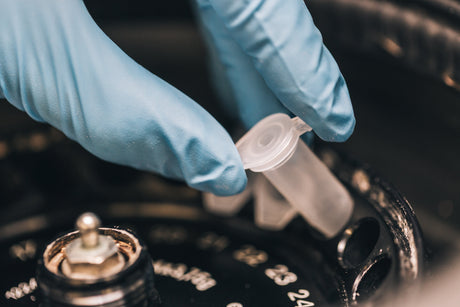
Microcentrifuge tubes are a daily essential for molecular biology, protein prep, and small-volume spins.
Typical uses:
- DNA/RNA cleanup and precipitation
- Enzyme reactions and quick spins
- Protein fraction handling
Key features to look for:
- Certified RCF rating for your microcentrifuge
- Tight, reliable cap closure
- Low-retention options for sensitive samples
Conical centrifuge tubes (typically 15 mL and 50 mL)
Conical tubes support larger sample volumes and clear pellet formation.
Typical uses:
- Cell pelleting and washing
- Media preparation and storage
- Sample transport and batching
Key features to look for:
- Leak-resistant cap and sturdy tube wall
- Clear graduations for quick volume checks
- RCF rating appropriate for your spin conditions
Specialty tubes (when the workflow benefits)
Some workflows use tubes designed for:
- High-speed spins at elevated RCF
- Long-term cold storage
- Harsh solvents or chemical exposure
- Sterile processing and cell culture handling
These options help teams align tube performance with the experiment's needs.
Selecting centrifuge tubes: the core decision checklist
When selecting centrifuge tubes, the most helpful approach is to work through a short set of technical questions.
1) What is the maximum RCF you will use?
Centrifuge tubes are rated by maximum RCF (relative centrifugal force). Choose a tube with a maximum RCF rating that comfortably covers your highest spin.
Positive habit: Use a safety margin rather than selecting a tube right at the limit.
2) What rotor and bucket format will you use?
Rotor design influences centrifuge tube compatibility.
Common rotor formats:
- Fixed-angle rotors
- Swing-bucket rotors
Compatibility basics:
- Match the tube size and shape to the rotor adapter or bucket.
- Confirm that the cap height and tube length fit without interference.
3) What volume range do you need?
Select a tube that fits your working volume.
Helpful guidance:
- Avoid filling tubes to the very top.
- Follow the manufacturer's fill line guidance when high-speed spins are involved.
4) Do you need sterile centrifuge tubes?
Sterile centrifuge tubes support workflows where cleanliness and contamination control are important.
Common uses:
- Cell culture handling and pelleting
- Sterile sample collection and storage
- Shared lab environments with sensitive assays
5) Will you autoclave the tube?
If heat sterilization is part of your SOP, choose autoclavable centrifuge tubes that are temperature- and cycle-compatible.
Positive habit: Confirm whether caps are also autoclavable and whether repeated cycles are recommended.
6) Will your sample contact harsh chemicals?
Solvent exposure can affect tube integrity. Choosing chemical-resistant centrifuge tubes supports stable performance with demanding reagents.
Examples where chemical resistance matters:
- Organic solvent handling
- Strong detergents in lysis buffers
- High-salt or reactive solutions are used in certain workflows
Centrifuge tube materials: what to know
Tube performance depends strongly on the choice of polymer. The main goal is to select a material that fits your chemical exposure, temperature, and mechanical stress.
Polypropylene (PP)
Polypropylene is widely used because it supports broad chemical resistance and a useful temperature range.
Positive advantages:
- Good general-purpose durability
- Common choice for conical tubes and many microtubes
Polyethylene (PE) and other polymers
Other polymers can be useful for specific applications, especially where clarity or specialized compatibility is desired.
Practical tip: Always verify chemical compatibility for solvents and reagents that are outside standard aqueous workflows.
Centrifuge tube compatibility: avoiding leaks, cracks, and rotor issues
Centrifuge tube compatibility is strongest when the tube, cap, and rotor all match.
Fit and adapter matching
- Use the correct adapter for smaller tubes.
- Confirm the tube sits fully and evenly.
Balance and symmetry
- Balance tubes by mass, not only by volume.
- Use matching tube types and similar fill levels.
Cap and seal performance
- Check that caps are fully seated.
- For high-speed spins, use tubes with caps designed for secure sealing.
These steps help protect both samples and equipment.
High-quality centrifuge tubes: what "high-quality" means in practice
"High-quality" is most useful when it translates into specific performance features.
High-quality centrifuge tubes often provide:
- Clear, accurate graduations
- Strong wall integrity and consistent molding
- Leak-resistant cap fit
- Reliable RCF rating and lot-to-lot consistency
- Labeling area that stays readable during cold storage
These features improve reproducibility and make daily work smoother.
How to choose the right centrifuge tube for common workflows
Here are practical choices that match common bench tasks.
DNA/RNA prep and quick spins
- Microcentrifuge tubes (0.5–2.0 mL)
- Low-retention options for sensitive nucleic acids
- Certified RCF rating that matches your microcentrifuge
Cell pelleting and washing
- Conical 15 mL or 50 mL tubes
- Sterile centrifuge tubes for cell culture workflows
- Strong cap seal to prevent leakage
High-speed pelleting and demanding spins
- Tubes with higher RCF ratings
- Confirm centrifuge tube compatibility with rotor and adapters
- Choose a robust polymer and a secure closure
Harsh reagent exposure
- Chemical-resistant centrifuge tubes aligned to your solvent/detergent use
- Verify compatibility with your specific chemicals
Best practices for tube handling and storage
Labeling that stays clear
- Label before centrifugation when possible.
- Use solvent-resistant markers for demanding workflows.
Temperature awareness
- Confirm tubes are rated for cold storage or heat exposure.
- Avoid rapid temperature shifts when working with brittle conditions.
Clean workflow habits
- Keep caps closed when not actively pipetting.
- Use fresh tubes for sensitive assays.
- Store tubes in clean racks to support organization.
These habits strengthen consistency and keep sample tracking smooth.
Common centrifuge tube mistakes and positive fixes
Mistake: using a tube beyond its RCF rating
Fix: Choose tubes rated above your maximum RCF with a safety margin.
Mistake: assuming all tubes fit all rotors
Fix: Confirm centrifuge tube compatibility and use the correct adapters.
Mistake: balancing by volume only
Fix: Balance by mass for the most stable run.
Mistake: using non-sterile tubes in sterile workflows
Fix: Choose sterile centrifuge tubes for cell culture and sensitive handling.
Mistake: exposing tubes to harsh solvents without checking
Fix: Select chemical-resistant centrifuge tubes and confirm compatibility.
Featured snippet: selecting centrifuge tubes in 6 steps
To select centrifuge tubes confidently:
- Confirm your maximum RCF and choose tubes rated above it.
- Match tube size and shape to your rotor and adapters.
- Choose the right volume format (microcentrifuge, 15 mL, 50 mL).
- Decide whether sterile centrifuge tubes are needed.
- Confirm autoclavable centrifuge tubes if heat sterilization is required.
- Verify chemical resistance when samples include solvents or strong detergents.
FAQs
What is the most important factor in centrifuge tube selection?
The most important factors are the tube's maximum RCF rating and its compatibility with your rotor. A tube rated for your highest spin supports safe, reliable performance.
Are microcentrifuge tubes and conical tubes interchangeable?
They serve different volume ranges and rotor formats. Microcentrifuge tubes are designed for small volumes, while microcentrifuge rotors support small volumes, and conical tubes support larger volumes and common bucket or adapter formats.
When should I use sterile centrifuge tubes?
Use sterile centrifuge tubes for cell culture handling, sterile pelleting steps, and workflows where contamination control is critical to strong results.
Can I autoclave all centrifuge tubes?
Only tubes labeled as autoclavable centrifuge tubes are intended for heat sterilization. It is helpful to confirm whether caps are also autoclavable and whether repeated cycles are recommended.
How do I choose chemical-resistant centrifuge tubes?
Choose tubes made from polymers compatible with your solvents or detergents, and verify resistance to your specific chemicals and exposure time. This supports tube integrity and safe handling.
Conclusion
A smart tube choice makes centrifugation safer, cleaner, and more consistent. By matching centrifuge tubes to RCF, rotor format, volume needs, sterility requirements, and chemical exposure, researchers build workflows that protect samples and equipment. With this centrifuge tube selection guide, selecting centrifuge tubes becomes a confident routine that supports reproducible results and smooth daily lab work.