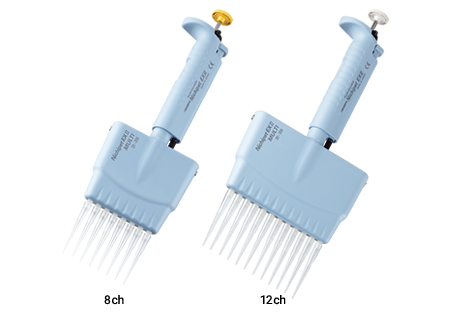
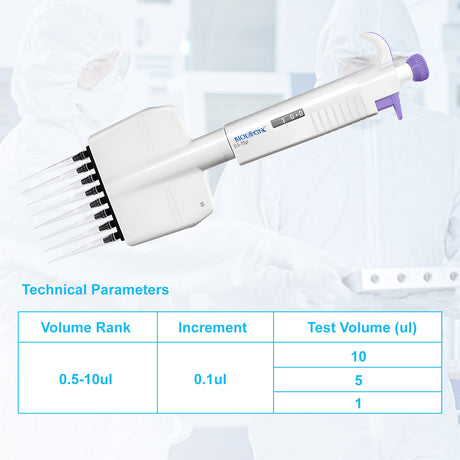
Polymerase Chain Reaction (PCR) is one of the most widely used techniques in modern biology because it enables fast, reliable, and scalable DNA amplification. In day-to-day lab work, the simplest way to set up consistent reactions is to use a PCR Master Mix, a pre-formulated blend that contains most of the ingredients needed for PCR amplification. Instead of pipetting many separate reagents into every tube, you add a measured amount of master mix, your primers, template DNA, and water. This approach reduces hands-on time, lowers pipetting errors, and improves reproducibility across samples and runs.
This guide explains PCR Basics with a practical focus: what a PCR Master Mix is, the core PCR Master Mix Components, and what each component does during amplification. You’ll also learn how to choose the right master mix format and how to avoid common setup mistakes that can lead to weak bands, nonspecific products, or failed reactions.
What Is a PCR Master Mix?
A PCR Master Mix is a ready-to-use reagent mixture that typically includes:
- DNA polymerase (often Taq or a high-fidelity enzyme)
- dNTPs (DNA building blocks)
- Reaction buffer (with optimized pH and salts)
- Mg²⁺ (usually as MgCl₂), essential for enzyme activity
- Often: enhancers or stabilizers (depending on the mix)
Most master mixes are supplied as 2X concentration. That means you mix equal volumes of master mix with the remaining reaction components (primers, template, and water) to achieve a final 1X working concentration.
Why labs use PCR master mixes
- Fewer pipetting steps
- Less chance of missing a reagent
- Better run-to-run consistency
- Cleaner workflow for multiple samples
PCR Basics: What the Reaction Needs to Work
PCR is a cyclic process that repeatedly copies a target DNA region. Each cycle has three main steps:
- Denaturation (94–98°C): double-stranded DNA separates.
- Annealing (50–65°C, typical): primers bind to target sites.
- Extension (68–72°C): polymerase extends from primers to synthesize new DNA.
For successful PCR amplification, the reaction must provide:
- A DNA template (what you want to amplify)
- Two primers (forward + reverse)
- A thermostable polymerase
- dNTPs
- Correct buffer + magnesium
- Appropriate cycling conditions
A PCR Master Mix supplies most of the “core chemistry,” so you can focus on primer design, template quality, and thermocycler settings.
PCR Master Mix Components and Their Functions
Below is a practical breakdown of the most important PCR Master Mix Components and what they do during amplification.
DNA Polymerase: the engine of amplification
Function: Synthesizes new DNA strands by extending primers.
Common options
- Taq polymerase: robust, fast, good for routine PCR. Has lower fidelity (more errors) because it lacks 3′→5′ proofreading.
- High-fidelity polymerase: includes proofreading activity; preferred for cloning, mutagenesis, and sequencing-sensitive applications.
Lab relevance:
If your downstream step is cloning a coding sequence or assembling constructs, high-fidelity enzymes reduce the incidence of point mutations. For quick presence/absence checks, Taq is often sufficient.
dNTPs: the DNA building blocks
Function: Provide A, T, G, and C nucleotides for new strand synthesis. Typical final concentration: often ~200 µM each dNTP in the reaction (exact depends on product).
Lab relevance:
Too low can reduce yield; too high can increase misincorporation and may chelate Mg²⁺, affecting enzyme performance.
Reaction Buffer: sets the chemical environment
Function: Maintains optimal pH and ionic strength for polymerase activity.
The manufacturer optimizes buffers for:
- pH stability at cycling temperatures
- salt concentration (e.g., KCl, (NH₄)₂SO₄ in some formulations)
- compatibility with enzyme and Mg²⁺ balance
Lab relevance:
Using the correct buffer is not “optional” in PCR. Swapping buffers between enzymes often results in low yields or nonspecific products.
Mg²⁺ (often MgCl₂): the critical cofactor
Function: Magnesium ions are required for polymerase catalysis and primer-template interactions.
Why Mg²⁺ matters
- Low Mg²⁺ → low yield or no product
- High Mg²⁺ → nonspecific amplification, primer-dimers, or smears
Many master mixes contain an optimized Mg²⁺ level for typical primers and templates. Some mixes allow Mg²⁺ adjustment if you need tighter specificity.
Stabilizers and enhancers: consistency across conditions
Many commercial PCR master mixes include proprietary additives that:
- stabilize polymerase during freeze-thaw
- improve performance in difficult templates (e.g., GC-rich regions)
- reduce inhibition from common contaminants
Examples of challenges these help with
- GC-rich targets that form stable secondary structures
- inhibitors carried over from extraction (salts, ethanol traces, heme, etc.)
Optional dyes for direct gel loading
Some mixes include:
- Tracking dyes (e.g., blue/yellow)
- Density agents for loading directly into agarose gels
Lab relevance:
Great for speed, but be aware that dye-containing mixes may slightly affect certain downstream applications. If you plan to purify PCR products, it usually remains fine—but always check compatibility.
Quick Reference Table: PCR Master Mix Components
|
Component |
What it does |
Why it matters in PCR amplification |
|
Thermostable DNA polymerase |
Extends primers to make new DNA |
Determines speed, robustness, and fidelity |
|
dNTPs |
Building blocks for DNA synthesis |
Controls yield and accuracy |
|
Buffer |
Maintains pH and ionic strength |
Enables optimal enzyme function |
|
Mg²⁺ (MgCl₂) |
Enzyme cofactor |
Balances yield vs specificity |
|
Stabilizers/enhancers |
Improve performance and stability |
Helps with inhibitors and difficult templates |
|
Loading dyes (optional) |
Visual tracking/loading convenience |
Speeds workflow for gel checks |
How to Use a 2X PCR Master Mix (Typical Setup)
Most labs use 2X master mixes because they simplify calculations.
Example: 25 µL PCR reaction
A common setup looks like this (always follow your product’s instructions if different):
- 12.5 µL 2X PCR Master Mix
- Forward primer (final 0.1–0.5 µM)
- Reverse primer (final 0.1–0.5 µM)
- Template DNA (amount depends on source)
- Nuclease-free water to 25 µL total
Practical tips for reproducibility
- Prepare a “reaction master mix” (PCR Master Mix + primers + water) for all samples, then aliquot and add template last.
- Mix gently; avoid bubbles when possible.
- Keep reagents cold during setup, especially for hot-start mixes (still best practice).
Hot-Start PCR Master Mix: What it changes
A hot-start PCR Master Mix contains a polymerase that stays inactive until heated (often during the initial denaturation step).
Why this helps
- Reduces nonspecific priming at room temperature
- Minimizes primer-dimer formation
- Improves specificity, especially for low-copy targets
When to choose hot-start
- Complex templates (genomic DNA)
- Multiplex PCR
- Targets prone to nonspecific bands
- High cycle numbers
Choosing the Right PCR Master Mix for Your Experiment
Different PCR goals call for different enzyme and buffer characteristics.
Routine screening PCR
Best fit: Standard Taq-based PCR Master Mix
Why: Robust, cost-effective, easy for gel-based checks.
Cloning, mutagenesis, sequencing-sensitive work
Best fit: High-fidelity PCR Master Mix
Why: Lower error rate improves downstream accuracy.
GC-rich or difficult templates
Best fit: Mixes labeled for GC-rich targets or with enhancers
Why: Additives help overcome secondary structure and improve yield.
Multiplex PCR
Best fit: Multiplex-optimized master mixes
Why: Balanced buffer chemistry improves equal amplification across targets.
Common PCR Problems and Master Mix-Related Fixes
Problem: No band or very low yield
Likely causes
- Template too low or degraded
- Incorrect annealing temperature
- Inhibitors in template prep
- Mg²⁺ effectively too low (rare with optimized mixes)
Practical fixes
- Confirm template quality (quick gel or spectro/fluoro check)
- Run a gradient PCR for annealing temperature
- Dilute template (sometimes reduces inhibitor concentration)
- Increase cycle number modestly (e.g., +3–5 cycles)
Problem: Multiple bands or smear
Likely causes
- Annealing temperature too low
- Too much template or primer
- Mg²⁺ effectively high (can relax specificity)
- Primer design issues
Practical fixes
- Increase annealing temperature or use touchdown PCR
- Reduce primer concentration
- Switch to hot-start master mix
- Redesign primers (check specificity, avoid repeats)
Problem: Primer-dimers
Likely causes
- Primers self-anneal or anneal to each other
- Low annealing temperature
- High primer concentration
Practical fixes
- Use hot-start master mix
- Increase annealing temperature
- Reduce primer concentration
- Redesign primers (avoid complementarity at 3′ ends)
Storage, Handling, and Best Practices
Storage
- Most PCR master mixes are stored at -20°C.
- Avoid repeated freeze-thaw cycles; aliquot if you use it frequently.
Handling
- Use clean, nuclease-free technique.
- Change tips between samples.
- Keep primers and mixes capped and on cold blocks during setup.
Controls that improve confidence
-
NTC (no-template control): detects contamination or primer dimers.
Conclusion: The Value of a PCR Master Mix
A PCR Master Mix simplifies Polymerase Chain Reaction setup by combining the essential chemistry—polymerase, dNTPs, buffer, and magnesium—into a consistent, easy-to-use format. Understanding the key PCR Master Mix Components helps you troubleshoot faster and choose the right mix for routine screening, high-fidelity cloning, or challenging templates. In practical lab terms, the best master mix is the one that supports clean specificity, strong yield, and repeatable results with minimal setup variation. When you pair a well-matched mix with good primer design and clean templates, PCR amplification becomes a dependable tool you can run confidently across many samples and experiments.