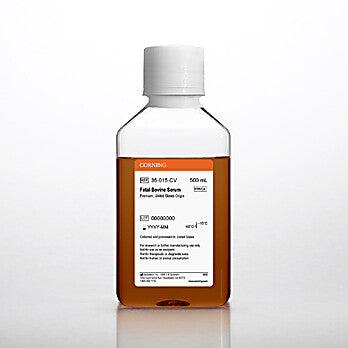
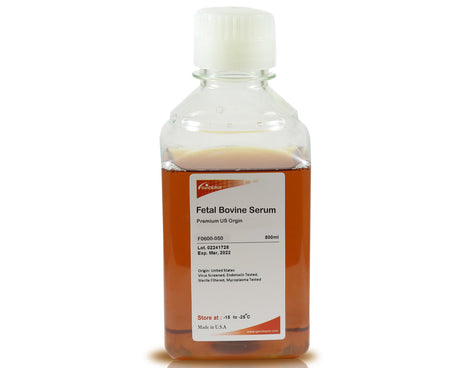
Fetal Bovine Serum, commonly known as FBS, is one of the most widely used supplements in mammalian cell culture. It provides a rich mixture of nutrients, proteins, hormones, growth factors, and attachment-supporting components that help many cell types survive, attach, and grow in vitro. For researchers working with cell lines, primary cells, assay development, or routine tissue culture, FBS can play a major role in experimental consistency.
However, not all FBS are the same. Differences in origin, treatment, filtration, endotoxin level, hemoglobin level, lot performance, and storage conditions can affect cell growth and reproducibility. This is why choosing the right FBS requires more than selecting the first bottle available.
What Is Fetal Bovine Serum?
Fetal Bovine Serum is the liquid fraction of blood collected from bovine fetuses after clotting factors have been removed. In research settings, it is commonly added to basal cell culture media to support the growth and maintenance of many mammalian cells.
FBS is valued because it contains a complex mixture of biological components. These include proteins, growth factors, hormones, lipids, vitamins, minerals, attachment factors, and transport proteins. Because of this broad composition, FBS can support many different cell types and experimental applications.
Why Is FBS Used in Cell Culture?
FBS in cell culture acts as a supportive supplement. Basal media provide essential salts, amino acids, glucose, and buffering systems, but many mammalian cells also need additional growth-supporting signals. FBS helps provide those signals.
Researchers use FBS because it can:
- Support cell attachment to culture surfaces
- Promote cell growth and proliferation
- Improve cell viability in routine culture
- Supply carrier proteins that bind and transport molecules
- Provide hormones and growth factors
- Help protect cells from stress in vitro
- Support recovery after thawing or passaging
The exact response depends on the cell type, medium, serum concentration, and experimental conditions. For many common cell lines, 5–10% FBS is frequently used, but the correct concentration should always follow the validated protocol for that cell type.
Key Benefits of Fetal Bovine Serum in Research
The benefits of fetal bovine serum in research come from its ability to create a supportive environment for many cell types. It is especially useful in routine cell maintenance, assay preparation, cell expansion, and experimental optimization.
|
Benefit |
Why It Matters in the Lab |
|
Supports cell growth |
Helps many cells divide and maintain healthy morphology |
|
Provides attachment factors |
Helps adherent cells attach to culture vessels |
|
Supplies growth factors |
Supports signaling needed for survival and proliferation |
|
Improves recovery |
Helps cells recover after thawing, splitting, or stress |
|
Broad compatibility |
Works with many established mammalian cell lines |
|
Useful for optimization |
Helps researchers compare media and culture conditions |
Fetal Bovine Serum Composition and Uses
FBS is not a chemically defined supplement. Its composition is complex, which is part of its strength and also part of the reason researchers must evaluate lots carefully.
Common components include:
- Albumin and other serum proteins
- Growth factors
- Hormones
- Lipids and fatty acids
- Vitamins and minerals
- Attachment-supporting factors
- Binding and transport proteins
- Trace elements
These components support a range of uses in cell culture, including routine cell line maintenance, cell growth studies, transfection recovery, assay development, and biological response testing. Because FBS is naturally derived, composition can vary between lots. This variability is one reason many labs perform lot testing before switching to a new serum batch.
How to Choose the Right FBS for Cell Culture
To choose the right FBS, researchers should match the serum to the cell type, application, quality requirements, and handling needs of the lab. A good choice supports consistent cell growth without introducing unnecessary variability.
1. Match FBS to Your Cell Type
Different cells respond differently to serum. A lot that works well for one cell line may not be ideal for another. Sensitive cells, primary cells, stem cells, immune cells, and assay-ready cultures may need more careful serum selection.
Before choosing FBS, confirm:
- Cell line or cell type requirements
- Recommended serum percentage
- Whether heat-inactivated serum is needed
- Whether low-endotoxin serum is required
- Whether the protocol recommends a specific grade or treatment
For routine cell culture, standard FBS may be sufficient. For specialized work, additional testing or treated serum may be needed.
2. Review Serum Origin and Traceability
Serum origin can matter for Documentation, regulatory expectations, and sourcing preferences. Many labs also review country of origin, traceability, and supplier quality systems before purchasing. For research workflows, traceability helps teams understand where the serum comes from and supports better inventory records. For procurement teams, this information can also help with internal approvals and repeat orders.
3. Check Endotoxin Levels
Endotoxin is a bacterial component that can affect sensitive cell-based assays. Even low levels may influence immune cells, cytokine studies, inflammation models, or other biological readouts.
Low-endotoxin FBS may be important for:
- Immune cell culture
- Cytokine response studies
- Stem cell workflows
- Primary cell culture
- Cell-based drug screening
- Inflammation-related research
If your cells are sensitive to endotoxin, review the product specification carefully before use.
4. Review Hemoglobin Levels
Hemoglobin level is another common quality indicator. Lower hemoglobin levels generally suggest cleaner serum processing and reduced red blood cell contamination. High hemoglobin may affect appearance, assay background, or certain sensitive applications. While requirements vary by workflow, hemoglobin information is useful when comparing FBS options.
5. Confirm Sterility and Filtration
FBS should be processed and tested for sterility. Many products are sterile-filtered, commonly through 0.1 µm or 0.2 µm filtration, depending on the supplier and grade. Before use, review whether the serum has been tested for microbial contamination, mycoplasma, and viruses according to the supplier's quality standards. For cell culture labs, sterility is not optional; it is central to reliable work.
6. Decide Whether Heat-Inactivated FBS Is Needed
Heat inactivation is a process that typically involves heating serum to reduce complement activity. Some protocols recommend heat-inactivated FBS for immunology, embryonic stem cells, insect cells, or specific sensitive workflows.
However, heat inactivation is not always necessary. It can also cause precipitation or reduce some heat-sensitive components. The best approach is to follow the validated protocol for your cell type or experiment. Featured snippet answer: Heat-inactivated FBS is useful for specific applications where complement activity may interfere with results. It should not be used automatically unless the protocol or cell type requires it.
7. Compare Lot-to-Lot Consistency
Lot variability is one of the biggest practical issues with FBS. Since FBS is a biological material, different lots can perform differently in cell culture.
Labs often test new lots before switching. A simple lot qualification study may compare:
- Cell growth rate
- Cell viability
- Morphology
- Attachment
- Assay signal
- Passage recovery
- Differentiation or functional markers, if relevant
For long-term projects, it may be helpful to reserve or purchase enough of a qualified lot to support consistent experiments.
8. Check Documentation
Good Documentation helps researchers and procurement teams make confident decisions. Before purchasing, review whether the supplier provides relevant specifications and quality information.
Useful Documentation may include:
- Certificate of analysis
- Country of origin
- Endotoxin level
- Hemoglobin level
- Sterility testing
- Mycoplasma testing
- Filtration details
- Storage recommendations
- Lot number and expiration date
Astor Scientific supports research teams by making it easier to explore laboratory products and review key details before adding materials to a workflow.
How to Use FBS in Cell Culture
FBS is usually added to basal media at a defined concentration. Many standard mammalian cell culture protocols use 10% FBS, but this is not a fixed rule. The correct amount depends on the cell type, application, and validated lab protocol.
General use steps include:
- Thaw FBS properly before use.
- Mix gently after thawing to distribute components evenly.
- Add the recommended amount to sterile basal medium.
- Use aseptic technique to avoid contamination.
- Label prepared complete medium with serum lot, date, and concentration.
- Store complete medium according to the lab's SOP and product guidance.
Avoid changing serum lots in the middle of a sensitive experiment unless the new lot has been qualified.
How to Store Fetal Bovine Serum Properly
Proper storage helps protect serum quality and performance. FBS is commonly stored frozen until use, but exact storage conditions should follow the supplier's instructions.
Best practices include:
- Store unopened FBS frozen, commonly at -20°C or colder if recommended
- Thaw slowly in a controlled way, often at 2–8°C overnight or in a 37°C water bath with careful monitoring
- Do not overheat serum during thawing
- Mix gently after thawing; avoid vigorous shaking
- Aliquot serum if repeated use is expected
- Avoid repeated freeze-thaw cycles
- Use sterile technique when transferring serum
- Keep records of lot number, thaw date, and aliquot date
Featured snippet answer: FBS should be stored frozen according to supplier instructions, thawed gently, mixed carefully, aliquoted when needed, and protected from repeated freeze-thaw cycles.
Common Mistakes to Avoid When Using FBS
Choosing FBS by Price Only
Price matters, but poor serum performance can cost more through failed cultures, repeated assays, and wasted time. Quality and suitability should guide selection.
Skipping Lot Testing
A new lot may not perform the same as the previous one. For critical workflows, test new lots before switching.
Using Heat-Inactivated FBS Without a Reason
Heat inactivation is useful for some applications, but not all. Use it when the protocol or cell type requires it.
Repeated Freeze-Thaw Cycles
Repeated freezing and thawing can affect serum performance. Aliquoting helps reduce this risk.
Poor Labeling
Unclear labels can lead to mistakes. Always record serum lot, thaw date, treatment type, and concentration in prepared media.
Ignoring Endotoxin for Sensitive Cells
For immune cells and inflammation-related assays, endotoxin can influence results. Always check specifications when cell response is important.
FAQs
What is Fetal Bovine Serum used for?
Fetal Bovine Serum is used as a supplement in cell culture media to support cell growth, attachment, survival, and proliferation for many mammalian cell types.
Why is FBS important in cell culture?
FBS provides proteins, hormones, growth factors, lipids, vitamins, minerals, and attachment-supporting components that help cells grow and remain healthy in vitro.
How do I choose the right FBS?
To choose the right FBS, match it to your cell type and application, then review origin, endotoxin level, hemoglobin level, sterility, filtration, treatment type, lot consistency, Documentation, and storage requirements.
What is the usual FBS concentration in cell culture?
Many mammalian cell culture protocols use 5–10% FBS, with 10% being common for routine culture. The correct concentration should follow the validated protocol for the specific cell type.
Should FBS always be heat-inactivated?
No. Heat-inactivated FBS is useful for certain applications, but it is not required for every cell culture workflow. Follow the protocol for your cell type and experiment.
How should FBS be thawed?
FBS should be thawed gently according to the supplier's guidance. Avoid overheating, mix gently after thawing, and use aseptic technique during handling.
Can FBS be refrozen?
Repeated freeze-thaw cycles should be avoided. If repeated use is expected, divide thawed serum into sterile aliquots and freeze the aliquots according to lab SOP and supplier recommendations.
What is cell culture serum?
Cell culture serum is a biological supplement added to culture media to support cell growth and survival. FBS is one of the most commonly used types of cell culture serum.
Conclusion
Fetal Bovine Serum is a valuable supplement for many cell culture workflows because it supports cell growth, viability, attachment, and recovery. But successful use depends on choosing the right serum and handling it properly. Researchers should evaluate FBS based on cell type, application, serum origin, endotoxin level, hemoglobin level, sterility, heat-inactivation status, lot consistency, Documentation, and storage requirements. For sensitive or long-term experiments, lot testing is a smart step that can improve reproducibility and reduce avoidable troubleshooting.
By taking a careful, informed approach, labs can use FBS more confidently and maintain healthier, more consistent cell cultures.