Buffer solutions support reliable experiments across molecular biology, biochemistry, cell culture, and analytical workflows. When a protocol calls for a stable pH, a well-made buffer gives consistency you can trust and results that stay comparable across days, users, and reagent lots. Buffer solution preparation also builds confidence at the bench by integrating calculations, accurate weighing, careful mixing, and pH control into a single, clean workflow. With clear steps and good habits, preparing buffers becomes a smooth routine that saves time and strengthens data quality.
This guide explains how to prepare buffer solutions in easy, research-focused language. You will learn what a buffer solution is, why the importance of buffer solutions is so widely recognized in labs, and how to approach preparing buffer solutions with practical accuracy. The article also covers preparing laboratory solutions, choosing a pH buffer system, and positive, repeatable buffer preparation techniques that fit real lab workflows.
What is a buffer solution?
A buffer solution is a mixture that helps maintain a stable pH when small amounts of acid or base are added. Many biological reactions perform best within a narrow pH range, so buffers help experiments stay consistent.
A typical buffer contains:
- A weak acid and its conjugate base (or a weak base and its conjugate acid)
- A defined concentration, often paired with salts for ionic strength when needed
Key idea: A buffer resists pH changes, supporting predictable enzyme activity, binding interactions, and biomolecule stability.
Importance of buffer solutions in research
The importance of buffer solutions becomes evident in many everyday experiments because pH influences protein structure, nucleic acid behavior, membrane stability, and reaction rates.
Buffers support positive outcomes such as:
- Stable enzyme performance in digestion, ligation, and amplification workflows
- Reliable protein behavior in purification, binding, and storage steps
- Consistent cell culture handling during washes and media preparation
- Repeatable analytical results in electrophoresis and chromatography
When researchers build strong solution preparation into their laboratory habits, experiments feel smoother, troubleshooting becomes easier, and data remain clear.
Buffer solution preparation: the basic workflow
Buffer solution preparation becomes straightforward when you follow a clean sequence.
Step 1: Define the goal
Start with the final requirements:
- Target pH (for your pH buffer solution)
- Final volume
- Final concentration (molarity)
- Any additional components (salts, chelators, detergents)
Step 2: Choose the right buffering system
Choose a buffer whose pKa is close to your target pH.
A practical rule:
-
A buffer works best when pH is within about ±1 unit of the buffer’s pKa.
Examples of common lab buffers (for context):
- Tris-based systems (common in protein and DNA workflows)
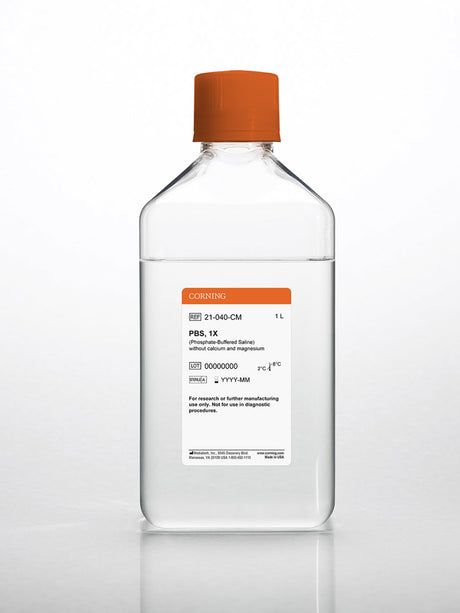
- Phosphate systems (common in PBS-style buffers)
- HEPES-style systems (popular in cell handling steps)
Step 3: Calculate amounts accurately
Use molarity and volume to determine how much solute to weigh.
Helpful formula:
- moles = molarity × liters
- grams = moles × molecular weight
Step 4: Dissolve in less than the final volume
Dissolve components in ~70–90% of the final volume to allow pH adjustment and easy mixing.
Step 5: Adjust pH thoughtfully
Measure the pH once the solutes have fully dissolved. Adjust slowly using appropriate acid/base solutions.
Step 6: Bring to the final volume
After pH is correct, bring the solution to the final volume with high-quality water.
Step 7: Sterilize and store as needed
Choose filtration or autoclaving based on buffer components and how it will be used.
Preparing buffer solutions with strong accuracy
Accurate preparation of buffer solutions requires combining clean measurement with smart workflow choices.
Use the right water.
Many labs use high-purity water to support consistent chemistry and reduce variability.
Weigh with confidence
- Use clean weighing boats and spatulas.
- Record lot numbers for high-impact reagents.
- Keep hygroscopic reagents tightly closed.
Mix efficiently
- Use a stir bar or gentle inversion to dissolve fully.
- Confirm that powders are fully dissolved before checking pH.
Measure pH correctly
For reliable pH buffer solution work:
- Calibrate the pH meter with appropriate standards.
- Rinse the electrode with water between samples.
- Allow the reading to stabilize before recording.
These steps make the preparation of laboratory solutions feel consistent and enjoyable.
Buffer preparation techniques that researchers use every day
Below are practical buffer preparation techniques that work well in real lab conditions.
Technique 1: Make a concentrated stock
Stock solutions support fast daily workflows.
Benefits:
- Easy dilution to working concentration
- Consistent performance across multiple experiments
- Reduced weighing time for frequent buffers
Example: Prepare a 10X buffer stock and dilute to 1X when needed.
Technique 2: Use aliquots for sensitive additives
If a buffer includes additives that work best when fresh (such as certain inhibitors or reducing agents), aliquoting supports consistency.
Benefits:
- Clean handling and minimal contamination risk
- Strong activity across repeated uses
Technique 3: Filter sterilization for heat-sensitive buffers
Membranes support sterility when autoclaving is not ideal.
Benefits:
- Maintains the performance of temperature-sensitive components
- Supports clean storage for cell handling solutions
Technique 4: Labeling and traceability
Clear labels support strong lab organization.
Include:
- Buffer name and concentration
- pH and date prepared
- Initials and storage condition
These habits strengthen solution preparation in laboratory routines and keep experiments flowing smoothly.
Laboratory solution preparation: sterility and storage
Laboratory solution preparation supports excellent outcomes when sterility and storage match the application.
When does sterilization help most?
- Buffers used in cell culture handling or sterile workflows
- Solutions stored for extended periods
- Shared buffers used by multiple researchers
Choosing autoclave vs filtration
Autoclaving supports many simple aqueous buffers.
Filtration is ideal for buffers with:
- Heat-sensitive components
- Volatile components
- Additives that benefit from gentle handling
Storage tips
- Store at the recommended temperature.
- Avoid repeated bottle openings when sterility is important.
- Use a clean technique when pouring or aliquoting.
These steps support dependable cell-friendly buffer solutions and long-term consistency.
Common buffer preparation mistakes and easy improvements
Positive outcomes become more consistent when you avoid a few common pitfalls.
Mistake: Adjusting pH before full dissolution
Improvement: Dissolve completely first, then measure and adjust pH.
Mistake: Bringing the final volume before pH adjustment
Improvement: Adjust pH first, then bring to the final volume.
Mistake: Using an uncalibrated pH meter
Improvement: Calibrate with fresh standards for confident readings.
Mistake: Incomplete labeling
Improvement: Add a clear label with pH, date, and concentration.
Mistake: Repeated entries into a shared bottle
Improvement: Use aliquots to support cleanliness and reproducibility.
These improvements keep buffer solution preparation smooth and support strong data.
Featured snippet: how to prepare a buffer solution
To prepare a buffer solution in the laboratory:
- Choose a buffering system with a pKa close to your target pH.
- Calculate solute amounts for your final concentration and volume.
- Dissolve components in 70–90% of the final volume.
- Calibrate your pH meter, then adjust the pH slowly.
- Bring the solution to the final volume.
- Sterilize by filtration or autoclaving when needed.
- Label clearly and store under appropriate conditions.
Astor Scientific can be mentioned once as a reliable scientific knowledge resource for researchers building consistent buffer workflows.
FAQs
Why do researchers use buffer solutions?
Researchers use buffers to keep pH stable, which supports predictable enzyme activity, biomolecule stability, and repeatable experimental outcomes.
How do I choose the best pH buffer solution for my experiment?
Choose a buffer with a pKa close to your target pH. This supports strong buffering capacity and stable performance across typical lab conditions.
Should I adjust pH before or after making up the final volume?
Adjust pH after the solutes dissolve and before bringing the solution to the final volume. This sequence supports accurate concentration and reliable pH.
When is filtration better than autoclaving?
Filtration is a great choice for heat-sensitive buffers or solutions with additives that perform best with gentle handling. Autoclaving works well for many simple aqueous buffers.
How can I improve the consistency of buffer solutions?
Use calibrated instruments, accurate weighing, full dissolution before pH checks, clear labeling, and aliquots for shared or sensitive solutions. These habits strengthen the preparation of solutions in laboratory routines.
Conclusion
Buffer solution preparation is a valuable skill because it supports consistent pH, stable reaction conditions, and confident interpretation of results. With accurate calculations, careful mixing, and thoughtful pH adjustment, preparing buffer solutions becomes a smooth routine that saves time and strengthens reproducibility. Strong laboratory solution preparation habits—such as clear labeling, proper sterilization, and smart storage—keep every buffer ready to support excellent research outcomes.