An antibody test (often called an antibody test or serology test) is a simple blood test that tells a much deeper story about your immune system. Instead of looking directly for a virus or bacteria, it looks for the proteins (antibodies) your body creates after an infection, vaccination, or sometimes even against its own tissues in autoimmune disease. Because of this, antibody tests are used in many different situations: checking if you’ve had an infection before, confirming whether a vaccine has worked, investigating autoimmune conditions, and making blood transfusions safer.
When a clinician orders an antibody test, they are rarely looking at just one number. They are trying to understand timing (past vs recent infection), immunity (protected or not), and sometimes risk (for example, whether your blood could react badly with donor blood). For laboratories and diagnostic centers, that means selecting the right antibody test kits, running them on reliable equipment, and following strict quality control so every result can be trusted. For patients, it simply looks like one small tube of blood—but that tube can answer big questions about health, history of disease, and next steps in care.
What is an antibody test, and how does it work?
Antibodies are Y-shaped proteins made by your immune system to recognize and neutralize specific targets, known as antigens. These targets might be:
- A virus (like measles)
- A bacterium
- Or, in autoimmune disease, a structure inside your own cells
An antibody test measures whether certain antibodies are present in your blood. In most cases, a sample of blood is sent to the laboratory, where it is tested using techniques such as ELISA or chemiluminescent assays. The test mixes your blood with carefully selected antigens; if the matching antibodies are present, they bind and create a signal the machine can read.
Different tests may focus on different types of antibodies:
- IgM antibodies often suggest recent or current infection.
- IgG antibodies usually indicate past infection or immunity from vaccination.
Because of this, one antibody test can help answer more than one question—did you have this infection recently, or did you have it long ago and are now protected?
Key clinical uses of antibody testing
1. Detecting past or recent infections
One of the most common reasons to order an antibody test is to look for signs of infection. For example, a measles antibody test will often measure both IgM and IgG:
- Measles IgM tends to appear shortly after infection and suggests that the infection is current or very recent.
- Measles IgG tends to stay for years and is usually taken as evidence of immunity, either from past infection or vaccination.
Similar patterns apply to many other infectious disease serology panels used in hospitals and public health labs. For these settings, laboratories rely on infectious disease antibody test kits, well-validated immunodiagnostic reagents, and robust clinical antibody testing services to support accurate diagnosis and outbreak control.
2. Checking immunity or vaccine response
Antibody tests are also widely used to confirm whether someone is immune to certain diseases. A person starting work in healthcare, for example, might need proof of immunity to measles or other vaccine-preventable infections. In these cases, a positive IgG result on a measles antibody test can be accepted as laboratory evidence of immunity. From a laboratory and product perspective, this falls under post-vaccination immunity testing, and it depends on highly specific antigens, consistent reagents, and robust antibody sensitivity test performance so that low but meaningful antibody levels are not missed.
3. Investigating autoimmune disease (blood test nuclear antibody / ANA)
When people search for a blood test for nuclear antibody, they are usually referring to the antinuclear antibody (ANA) test. This test looks for antibodies that react with components inside the cell nucleus.
A positive ANA test can be seen in a range of autoimmune conditions, including:
- Systemic lupus erythematosus
- Scleroderma
- Sjögren’s syndrome
- Mixed connective tissue disease
However, a key point for patients is that a positive ANA alone is not a diagnosis. Some healthy people can have a low-titer positive ANA. Doctors interpret ANA results in the context of your symptoms, physical exam, and other tests. For specialist labs, ANA is usually part of broader autoimmune disease testing panels, which may also include more specific antibodies, all supported by high-quality autoantibody reagents and advanced immunology lab equipment.
4. Blood bank safety (antibody screening test positive)
In transfusion medicine, laboratories perform a routine antibody screening test before blood transfusions. The goal is to detect unexpected antibodies in the patient’s blood that could react with donor red blood cells.
If the report shows “antibody screening test positive”, it means such antibodies are present. The lab then performs additional testing to identify which antibody is there and selects compatible blood units to avoid transfusion reactions. This kind of testing depends heavily on reliable blood bank antibody screening reagents, extended cell panels, and robust protocols that keep patients safe when they need blood urgently.
5. Other medical uses
Antibody tests have several other important roles in patient care, such as:
- Evaluating immune deficiency, if the body is not producing enough antibodies
- Detecting excess or abnormal antibody production, sometimes seen in blood cancers.
- Supporting diagnosis of chronic or parasitic infections, where antibodies may remain detectable long after the organism has cleared
For laboratories, these use cases are often supported by specialized immunology testing menus, high-quality antibody test kits for laboratories, and carefully chosen immunodiagnostic platforms that can handle both routine and complex testing.
Step-by-step: what happens during an antibody test?
Even though the science behind an antibody test is complex, the patient experience is usually straightforward.
-
Clinical assessment and ordering: Your healthcare provider listens to your symptoms, reviews your medical history and vaccines, and decides which antibody test is appropriate: measles, ANA, heterophile antibody test, or a broader panel.
-
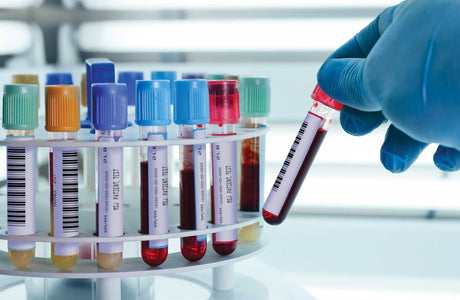
Sample collection: Most antibody tests use a venous blood sample. A tourniquet is placed on your arm, the skin is cleaned, and a small amount of blood is drawn into a tube. A bandage is applied, and you can usually return to normal activities immediately. In some rapid point-of-care tests, a small finger-prick sample may be enough.
-
Laboratory processing: In the lab, your blood is processed using validated clinical laboratory antibody testing services. Serum or plasma is separated and then tested with the appropriate kit. Antigens attached to plates, beads, or other surfaces are exposed to your sample, and any matching antibodies bind to them. A detection system then translates this binding into a measurable signal. This step is where antibody sensitivity test performance and strict quality control really matter, especially when antibody levels are low.
-
Result interpretation and reporting: The laboratory reports whether the test is positive or negative, and may also provide a titer (such as 1:160 for ANA) or a quantitative value. Your clinician then interprets this result along with your symptoms and other findings. For example, a heterophile antibody test that is positive in a patient with fever, sore throat, and swollen lymph nodes may support a diagnosis of infectious mononucleosis. In contrast, a measles antibody test result helps guide infection control and vaccination decisions.
Antibody test cost and access
People often ask about antibody tests and whether they can buy an antibody test themselves. In many regions, the cost depends on:
- The type of test (e.g., measles antibodies, ANA, heterophile test, full autoimmune panel)
- Whether it is done in a public hospital, private lab, or specialized center
- Insurance coverage or national health system policies
Some private laboratories offer direct-to-consumer testing where individuals can purchase certain antibody tests, but interpretation should still be done with a healthcare professional. For institutions, long-term cost is shaped by choices around high-throughput analyzers, reagent contracts, and the efficiency of their immunodiagnostic platforms.
FAQs about antibody tests
Is an antibody test the same as a PCR test?
No. A PCR test looks for the genetic material of a virus or bacteria. An antibody test looks for your body’s immune response to that pathogen. PCR is often used to detect current infection, while antibody tests are more useful for understanding past infection or immunity status.
How soon after infection will an antibody test become positive?
It varies, but many infections lead to detectable antibodies within one to three weeks after symptoms begin. IgM usually appears first, followed by IgG. This timing is why a very early antibody test can sometimes be negative even when symptoms have just started, and why repeat testing may be recommended in certain cases.
Does a positive ANA (nuclear antibody) mean I definitely have an autoimmune disease?
Not always. A positive ANA or blood test nuclear antibody result means antinuclear antibodies are present, but many people with a positive test never develop lupus or other connective tissue diseases. Doctors look at ANA in combination with your symptoms, examination, and additional autoantibody tests before making any diagnosis.
What does “antibody screening test positive” mean in a transfusion report?
If your transfusion report notes “antibody screening test positive”, it means there are unexpected antibodies in your blood that could react with donor red blood cells. The laboratory will perform further testing to identify the antibody and will choose compatible blood to keep your transfusion as safe as possible.
Can antibody tests guide my vaccination decisions?
In some situations, yes. For example, a measles IgG antibody test can be used to confirm immunity in students or healthcare workers. However, decisions about vaccines should always be made in consultation with your doctor, using both lab results and official guidelines.
Conclusion
A clear understanding of how antibody tests work makes results much less confusing for patients and far more powerful for clinicians. Whether the goal is to confirm immunity, investigate unexplained symptoms, or ensure safe transfusion, the right antibody test, combined with accurate laboratory practice and thoughtful interpretation, becomes an essential tool in modern medicine.