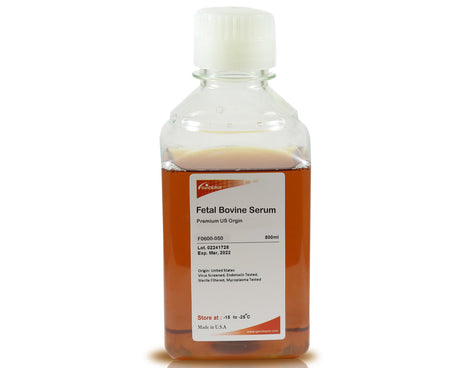
Serum-free media has become an important option for researchers who want more control, consistency, and reproducibility in cell culture. Traditional cell growth media often contain Fetal Bovine Serum (FBS), which supports cell survival and cell proliferation by providing growth factors, hormones, proteins, and attachment-supporting components. However, because serum is biologically derived, its composition can vary from lot to lot.
Serum-free media is designed to reduce that variability by replacing serum with defined nutrients, proteins, growth factors, hormones, or specialized supplements. This can be valuable for sensitive assays, drug screening, cell biology studies, and workflows where consistent culture conditions are essential. At the same time, serum-free cell culture is not always simple. Some cells need adaptation, growth may slow, and each formulation must be matched carefully to the cell type and experiment.
What Is Serum-Free Media?
Serum-free media is cell culture media formulated without animal serum. Instead of relying on FBS or another serum source, it contains selected nutrients and supplements that help support cell growth, metabolism, survival, and function.
Depending on the formulation, serum-free media may contain:
- Amino acids
- Vitamins
- Salts and buffering agents
- Glucose or other energy sources
- Growth factors
- Hormones
- Recombinant proteins
- Lipids or fatty acids
- Attachment-supporting factors
- Trace elements
Some serum-free formulations are chemically defined, meaning every component is known. Others are serum-free but may still contain proteins or supplements that are not fully chemically defined.
Why Researchers Use Serum-Free Media
Researchers use serum-free media when they need more consistent and controlled cell culture conditions. Serum can be very helpful for routine culture, but it also introduces unknown or variable components. These components may affect cell behavior, cell metabolism, assay readouts, or downstream analysis.
Serum-free conditions are often considered when a lab wants to:
- Reduce lot-to-lot variability
- Improve reproducibility
- Control experimental conditions more precisely
- Reduce serum-derived interference
- Support sensitive assays
- Simplify downstream purification or analysis
- Move toward more defined culture systems
For biotech R&D teams and assay development labs, this control can be especially helpful when small changes in media composition may affect experimental outcomes.
Serum-Free Media vs Serum-Containing Cell Growth Media
Both serum-free and serum-containing media can be useful. The best choice depends on the cell line, application, and research goal.
|
Feature |
Serum-Free Media |
Serum-Containing Media |
|
Composition |
More defined and controlled |
Complex and naturally variable |
|
Reproducibility |
Often improved when optimized |
May vary by serum lot |
|
Cell adaptation |
May require gradual adaptation |
Often easier for routine culture |
|
Cell proliferation |
Can be strong if optimized |
Often supports broad cell growth |
|
Cost |
Often higher |
Variable, depending on serum price |
|
Best use |
Controlled assays, defined workflows, sensitive studies |
Routine maintenance and many standard cell lines |
A practical approach is to use serum-containing media when it is validated and reliable for routine culture, and consider serum-free media when better control or lower variability is needed.
Advantages of Serum-Free Media in Cell Culture
1. More Defined Culture Conditions
One of the strongest advantages of serum-free media in cell culture is better control over what cells are exposed to. Serum contains many biological components, some of which may not be fully characterized. Serum-free formulations reduce this uncertainty by using selected ingredients. This is valuable when researchers need to study signaling pathways, growth responses, metabolism, gene expression, or drug effects under controlled conditions.
2. Reduced Lot-to-Lot Variability
Serum lots can differ in growth factor levels, protein content, hormones, and other biological components. These differences may affect cell proliferation, morphology, or assay performance. Serum-free media can reduce this variability, especially when the formulation is defined and consistently manufactured. For long-term projects, this can support better reproducibility and easier comparison between experiments.
3. Better Reproducibility
Reproducibility is a major goal in cell culture. When media composition is more consistent, researchers can reduce one source of experimental variation. This is helpful for assay development, drug screening, cell signaling studies, and quality-sensitive research workflows. For lab managers, serum-free workflows can also support more standardized SOPs when the right formulation has been validated.
4. Lower Risk of Serum-Derived Interference
Serum can contain proteins, enzymes, hormones, antibodies, and other components that may interfere with experimental readouts. In some assays, these unknown factors can make results harder to interpret.
Serum-free media may be useful for:
- Protein expression studies
- Secreted protein analysis
- Cell signaling experiments
- Drug response assays
- Immunology workflows
- Downstream purification
- Biomarker analysis
By reducing background from serum components, researchers may get cleaner and more interpretable data.
5. Useful for Sensitive Assays and Downstream Analysis
Some experiments require media with fewer undefined components. For example, if researchers are measuring secreted proteins, serum proteins can complicate analysis. If they are testing drug response, serum binding proteins may affect compound availability. Serum-free media can help create a cleaner experimental environment, making it easier to connect observed results to the tested condition.
Disadvantages of Serum-Free Media
1. Cell Line-Specific Optimization
One of the main disadvantages of serum-free media is that it may not work equally well for every cell line. Some cells adapt easily, while others grow slowly or lose viability. Researchers should avoid assuming that one serum-free formulation will support all cell types. Each cell line may need a specific medium, supplement package, coating surface, or adaptation protocol.
2. Slower Adaptation
Cells that have been maintained in serum-containing media may need time to adjust. A sudden switch can cause stress, reduced cell proliferation, abnormal morphology, or cell death. Gradual adaptation is often more successful. This may involve slowly reducing serum concentration over several passages while increasing the percentage of serum-free media.
3. Possible Reduced Cell Proliferation
Serum contains many growth-supporting factors. If the serum-free formulation does not provide the right signals, cell proliferation may slow. Cells may spend longer in the lag phase after passage, reach a lower density, or show delayed recovery after thawing. This does not mean serum-free media is poor. It means the formulation must be matched to the cell type and optimized carefully.
4. Higher Cost
Serum-free formulations can be more expensive than basic media because they may contain specialized supplements, recombinant proteins, growth factors, or defined components. However, the higher cost may be worthwhile if it improves reproducibility, reduces failed assays, or supports cleaner downstream analysis. Labs should evaluate cost in relation to data quality, workflow consistency, and project goals.
5. Greater Sensitivity to Handling
Some serum-free media systems are more sensitive to handling conditions. Missing a supplement, using the wrong coating, warming media repeatedly, or changing passage timing can affect results. Good documentation and consistent technique are especially important when working with serum-free conditions.
How Serum-Free Media Affects Cell Proliferation and Growth Phases
Cell proliferation depends on nutrients, growth factors, attachment conditions, pH, osmolarity, and cell density. Serum-free media can support strong proliferation when it is properly matched to the cell type. However, cells may show different behavior during adaptation.
In a typical growth curve, cells move through several growth phases:
- Lag phase: Cells adjust after seeding or media change
- Log phase: Cells actively divide and expand
- Stationary phase: Growth slows as nutrients decrease or density increases
- Decline phase: Viability drops if conditions become stressful
During serum-free transition, the lag phase may become longer. Cell proliferation may also slow temporarily while cells adapt. Researchers should monitor growth rate, morphology, viability, and passage recovery before deciding whether a serum-free formulation is successful.
Common Problems With Serum-Free Cell Culture
Problems with serum-free cell culture are often related to mismatch, adaptation, or handling. Most issues can be improved with careful optimization.
|
Problem |
Possible Cause |
Practical Step |
|
Slow growth |
Incomplete adaptation or missing supplement |
Use gradual adaptation and confirm supplement recipe |
|
Low viability |
Sudden serum removal or stress |
Reduce serum slowly over passages |
|
Poor attachment |
Cells need coating or attachment factors |
Try recommended coated surfaces |
|
Abnormal morphology |
Media not suited to cell type |
Compare with validated control conditions |
|
Weak assay signal |
Cells not fully adapted |
Extend adaptation and monitor growth curve |
|
Inconsistent results |
Handling or supplement variation |
Standardize SOP and document lot numbers |
A positive outcome depends on treating serum-free media as a controlled system. The more defined the system, the more important careful technique becomes.
When Should You Use Serum-Free Media?
Serum-free media may be a good choice when the research goal requires defined, reproducible, or low-background conditions. It is especially useful when serum components may interfere with the experiment.
Consider serum-free media when:
- Serum lot variability affects results
- Assay reproducibility is a priority
- Secreted proteins or metabolites are being measured
- Downstream purification is needed
- Drug response needs a cleaner interpretation
- A defined culture system is required
- The cell line has a validated serum-free protocol
Serum-containing media may still be the better choice for routine maintenance when the protocol is well established, and cells perform consistently.
FAQs
What is serum-free media?
Serum-free media is cell culture media formulated without animal serum. It contains selected nutrients and supplements designed to support cell growth and function.
What are the main advantages of serum-free media?
The main advantages include more defined culture conditions, reduced serum variability, better reproducibility, lower serum-derived interference, and cleaner downstream analysis.
What are the disadvantages of serum-free media?
The disadvantages include cell line-specific optimization, slower adaptation, possible reduced cell proliferation, higher cost, and greater sensitivity to handling or missing supplements.
Is serum-free media better than serum-containing media?
Serum-free media is better for controlled and reproducible workflows, while serum-containing media may be easier for routine culture of many cell lines. The better option depends on the cell type and experiment.
Why do cells grow slowly in serum-free media?
Cells may grow slowly if they are not fully adapted, if required growth factors are missing, or if the formulation is not suitable for that cell line.
How can I reduce problems with serum-free cell culture?
Use a validated formulation, adapt cells gradually, monitor cell proliferation, track morphology and viability, confirm supplements, and follow consistent handling practices.
Conclusion
Serum-free media offers valuable advantages for researchers who need more defined, consistent, and reproducible cell culture conditions. It can reduce serum-related variability, improve experimental control, and support cleaner analysis in sensitive workflows.
At the same time, the disadvantages of serum-free media should be considered carefully. Some cells require gradual adaptation, specialized supplements, or optimized handling before they perform well. The best approach is to match the media to the cell type, monitor cell proliferation and growth phases, and document each step of the transition. For many research teams, serum-free media is not simply a replacement for serum-containing media. It is a tool for building better-controlled cell culture workflows when the application requires it.